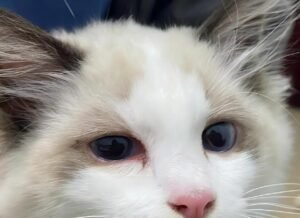

Many cats love curling up in a sunny spot by the window or spending a lazy afternoon soaking up the warmth of the sun. For most cats, a little sunshine is simply a comfortable way to relax.
However, enjoying the sun does not mean cats are protected from its harmful effects. Just like people, cats can experience sun damage when their skin is exposed to too much ultraviolet (UV) radiation. This risk is especially higher for white cats, light-colored cats, and hairless breeds because they have less natural protection against UV rays.
Repeated sun exposure can cause skin irritation and inflammation. Over time, chronic UV damage may also increase the risk of certain skin conditions, including squamous cell carcinoma (SCC), a type of skin cancer commonly found on areas with little fur coverage.
Understanding why cats get sunburned, what the warning signs look like, and how to prevent sun damage can help you keep your cat safe while still allowing them to enjoy their favorite sunny spots.
Why Are White Cats More Likely to Get Sunburned?
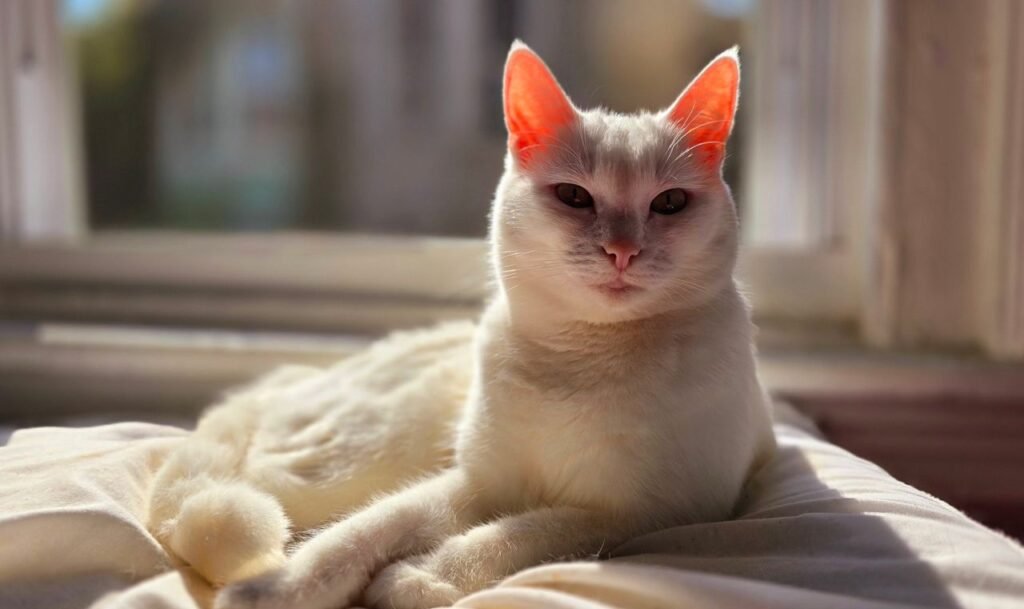
White cats are more vulnerable to sun damage because they typically have less melanin, the pigment responsible for skin and fur color. Melanin also plays an important role in helping protect the skin from ultraviolet radiation.
Compared with cats that have darker fur, white and light-colored cats generally have less natural protection against UV exposure. When they spend too much time in direct sunlight, especially during peak UV hours, they are more likely to develop signs of sun damage, such as redness, sensitivity, or skin irritation.
Certain areas of a cat’s body are particularly vulnerable because they have thinner skin or less fur coverage. The ear tips, nose, eyelids, and areas around the lips are common places where sun damage can occur.
Ears Are One of the Most Sensitive Areas
A cat’s ears, especially the ear tips, are among the areas most commonly affected by long-term sun exposure. The skin in these areas is thin, and there is often not enough fur to provide adequate protection from UV rays.
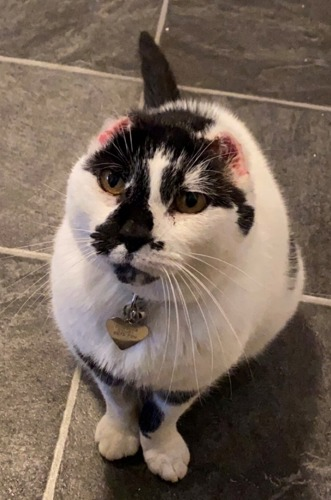
A real-life example comes from Cats Protection, a UK animal welfare organization, which shared the story of a stray cat named Dibbs. After spending years outdoors, the 12-year-old cat developed severe sun damage on his ear tips. A veterinary examination found that the damaged areas had developed into squamous cell carcinoma, a type of skin cancer associated with long-term UV exposure.
To prevent the cancer from progressing, veterinarians removed the affected portions of Dibbs’ ears. Thankfully, Dibbs recovered well after surgery and later found a loving home.
Dibbs’ story is an important reminder that while cats may love basking in the sunshine, too much direct sunlight can create serious health risks, especially for white and light-colored cats.
The Nose Can Also Be Affected by UV Exposure
A cat’s nose is another area that can be affected by sun exposure. Cats with pink noses, white fur, or little fur around the nose are especially vulnerable because their skin has less natural protection from UV rays.
A sun-damaged nose may appear red, dry, flaky, or crusty. Some cats may also become sensitive when the area is touched. If a nose problem does not heal, keeps developing scabs, or forms sores, it is important to have your cat checked by a veterinarian.
Keep in mind that not every dark spot or color change on a cat’s nose is caused by sun damage. Some cats naturally develop pigmentation changes, such as small dark spots, which can be harmless. However, any changes accompanied by pain, wounds, swelling, or irritation should be evaluated.
Do Hairless Cats Need Sun Protection?
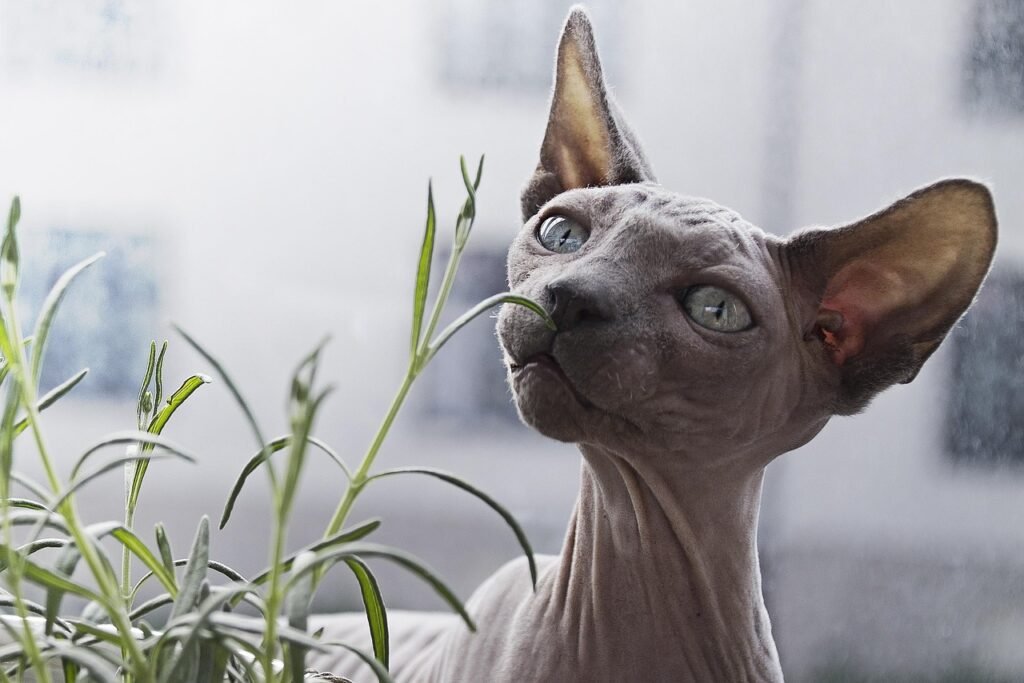
Hairless cats, such as Sphynx cats, do not have a protective coat of fur, which means their skin is directly exposed to the environment. While they are famous for their unique appearance, their exposed skin requires extra care.
During warm weather, hairless cats should not spend long periods in direct sunlight. Providing shaded areas indoors and limiting exposure to strong sunlight can help reduce the risk of UV damage.
If your hairless cat regularly goes outdoors, talk with your veterinarian before using any sunscreen product. Never assume that human sunscreen is safe for cats, as some ingredients may be harmful if absorbed or licked off during grooming.
Signs of Sunburn in Cats
The symptoms of sunburn in cats can vary depending on how much damage has occurred.
Mild sunburn may cause the skin to appear pink or red and may make the affected area more sensitive than usual. Some cats may lick, rub, or scratch the area because of discomfort.
With more severe sun damage, the skin may begin to peel, develop crusts, or form blisters. At this stage, scratching can make the condition worse and may lead to secondary infections.
In serious cases, cats may develop painful sores, ulcerated skin, or wounds that fail to heal. Repeated UV damage over time can also increase the risk of skin problems, including squamous cell carcinoma. Any unusual skin changes that persist should be checked by a veterinarian.
How Can You Prevent Sunburn in Cats?
The best way to prevent sunburn is to reduce your cat’s exposure to strong sunlight, especially during the hours when UV levels are highest. In general, sunlight is strongest between 10 a.m. and 4 p.m., so cats should avoid spending long periods in direct sun during this time.
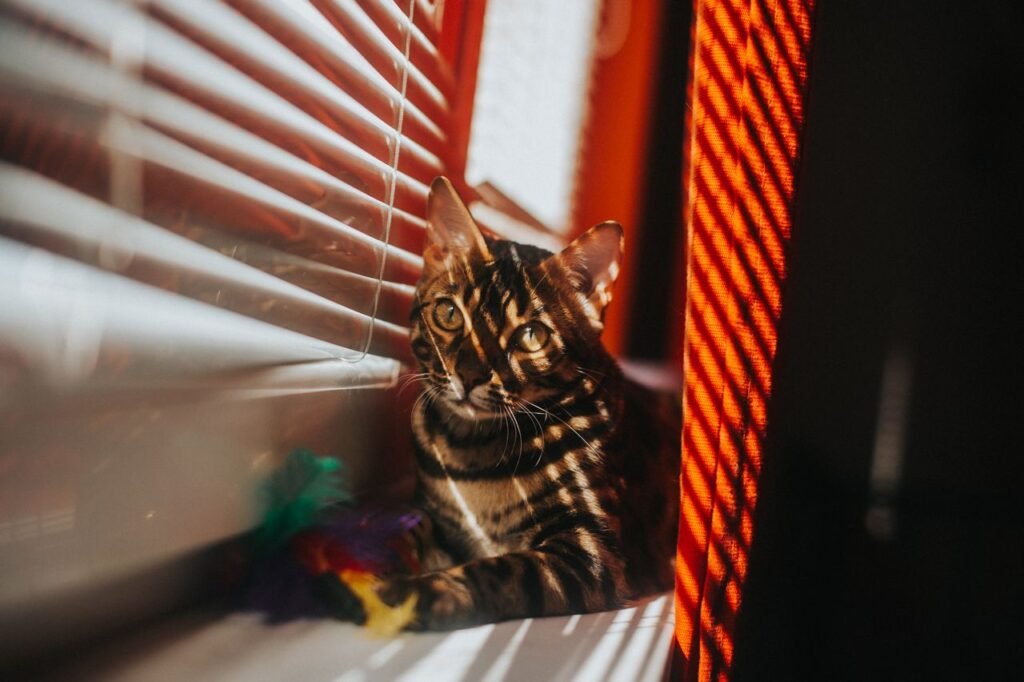
If your cat enjoys sitting near windows or relaxing on a balcony, you can still let them enjoy their favorite spot while reducing UV exposure. Window shades, curtains, or UV-blocking window films can help limit the amount of direct sunlight reaching your cat.
For cats that spend time outdoors, ask your veterinarian whether additional protection, such as a cat-safe sunscreen product, is appropriate.
It is also important not to shave your cat’s coat simply to help them stay cool. A cat’s fur plays an important role in temperature regulation and provides a natural barrier between the skin and sunlight. Related: Cat Heatstroke: Signs, Treatment, and Prevention
What Should You Do If Your Cat Gets Sunburned?
If you suspect your cat has sunburn, move them away from direct sunlight and allow them to rest in a cool, comfortable area.
For mild discomfort, you can gently place a cool, damp cloth on the affected area for a short time. Avoid applying ice directly to the skin, and do not use human creams, lotions, or medications unless your veterinarian specifically recommends them.
If your cat develops blisters, open wounds, bleeding, severe pain, or skin changes that do not improve, contact your veterinarian as soon as possible.