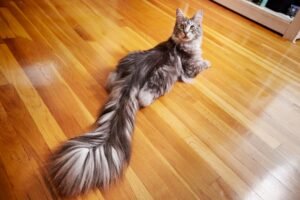

Like human ears, a cat’s ears do more than help it hear. They also play an important role in balance, locating the source of sounds, and expressing emotions.
Each cat ear has 32 independently movable muscles and can be divided into three main parts: the outer ear, middle ear, and inner ear. Each part has a different job. The outer ear collects and channels sound, the middle ear transfers and amplifies vibrations, and the inner ear converts sound into nerve signals and helps maintain balance.
Let’s take a closer look at the structure of a cat’s ears.
The Outer Ear
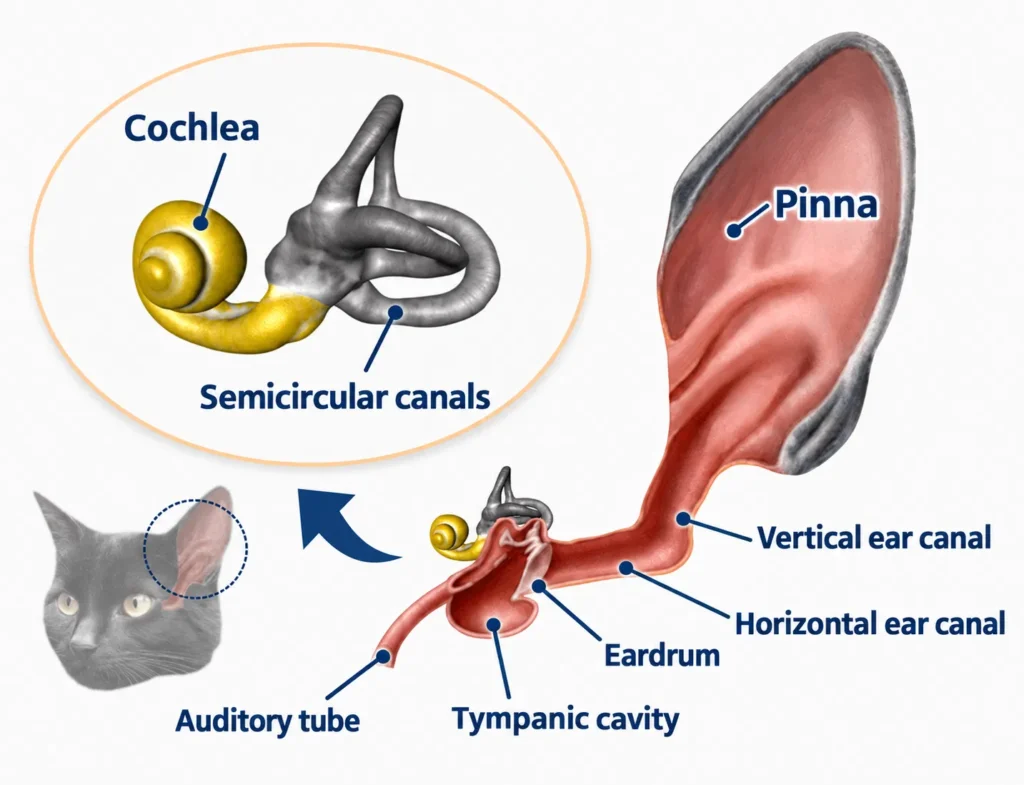
The outer ear mainly consists of the pinna and the external auditory canal.
The pinna is the visible part of the ear that can move and turn in different directions. A cat’s pinna is triangular or roughly triangle-shaped. It is supported by cartilage and covered with skin and fur. The pinna can turn toward different directions, acting like an adjustable sound receiver that gathers sound and directs it into the ear canal.
These flexible movements are made possible by groups of small muscles around the base of the ear. When a cat is curious or notices a sound, its ears usually point forward. When it feels alert, uneasy, or annoyed, its ears may turn sideways or backward. When it is frightened, tense, or showing submission, its ears may flatten against its head.
Keep in mind that ear position can reveal both where a sound is coming from and how a cat is feeling. You should not judge a cat’s emotional state based on a single ear movement alone.
The external auditory canal is the passage that carries sound from the pinna to the eardrum. A cat’s ear canal is generally shaped like an L, with a vertical section that extends downward and a horizontal section that then runs inward. This curved shape helps protect the eardrum from direct exposure to the outside environment. However, it also makes the deeper parts of the ear canal difficult to see without special equipment.
The Middle Ear
At the end of the ear canal is the eardrum (tympanic membrane). This thin, flexible membrane vibrates when sound waves reach it.
On the inner side of the eardrum is the tympanic cavity, an air-filled space inside the middle ear. It contains three tiny bones called the auditory ossicles:
- Malleus (hammer): Connected to the eardrum, it receives the vibrations first.
- Incus (anvil): Located between the malleus and stapes, it passes the vibrations along.
- Stapes (stirrup): Transfers the vibrations to the inner ear.
Together, these three bones form a chain that efficiently carries the relatively weak vibrations picked up by the eardrum to the inner ear.
The middle ear is also connected to the throat by the auditory tube, also called the Eustachian tube. This tube helps balance air pressure inside and outside the middle ear, allowing the eardrum to vibrate normally.
The Inner Ear
The inner ear lies deep inside the skull and mainly consists of the cochlea and the vestibular system.
The cochlea is a spiral-shaped structure that contains sensory cells. When vibrations from the auditory ossicles reach the inner ear, they cause fluid inside the cochlea and the basilar membrane to move, stimulating tiny sensory cells called hair cells.
These hair cells convert mechanical vibrations into electrical signals. The signals then travel through the auditory nerve to the brain, where they are processed as sound.
Next to the cochlea is the vestibular system, which includes three semicircular canals and other structures involved in balance. The semicircular canals detect rotational movements of the head, helping cats sense their body position and direction of movement.
Hearing and balance involve different structures within the inner ear, but these structures lie close together. As a result, diseases affecting the inner ear can sometimes cause both hearing problems and difficulties with coordination.
A cat’s cochlea is about two-thirds the length of a human cochlea, and it contains 10,000 fewer hair cells than a human cochlea, with approximately 12,000 in total. At the same time, cats have about 20,000 more nerve fibers extending from their ganglion cells than humans do, bringing the total to around 50,000.
These differences may be one reason cats can hear a wider range of sounds than humans.
The Muscles of a Cat’s Ears
Cats can move their ears so freely thanks to the 32 muscles in each ear. These muscles work together to control the direction, angle, and position of the pinna.
It is important to note that these muscles are mainly found around the outer ear, particularly the pinna and its base. They are not evenly distributed across the outer, middle, and inner ears. The muscles of the outer ear control ear movements, while the middle and inner ears are mainly responsible for transferring sound vibrations, converting them into nerve signals, and maintaining balance.
Ears Pointing Forward
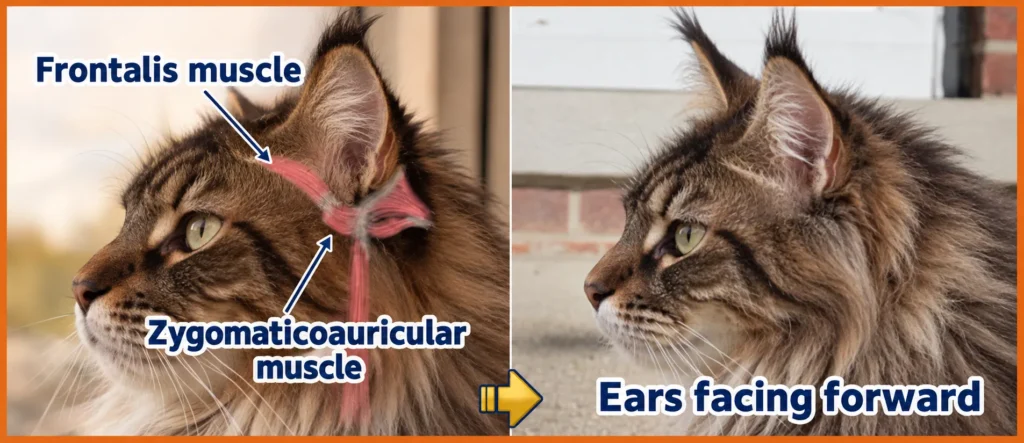
When a cat turns its ears forward, the frontalis and zygomaticoauricularis muscles are the main muscles involved. Cats often make this movement when they are surprised or interested in something.
Ears Pointing Backward
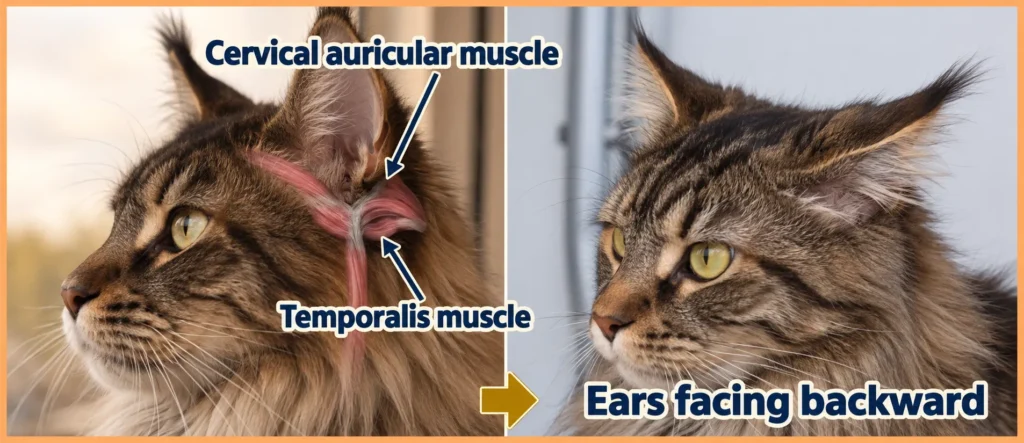
When a cat turns its ears backward, the cervicoauricularis and temporalis muscles are the main muscles involved. Cats often make this movement when they feel unhappy or angry.
Ears Pointing Downward
When a cat lowers its ears and points them downward, the parotidoauricularis muscle plays the main role. Cats often make this movement when they feel frightened or are showing submission.
Different Ear Shapes and Anatomical Differences
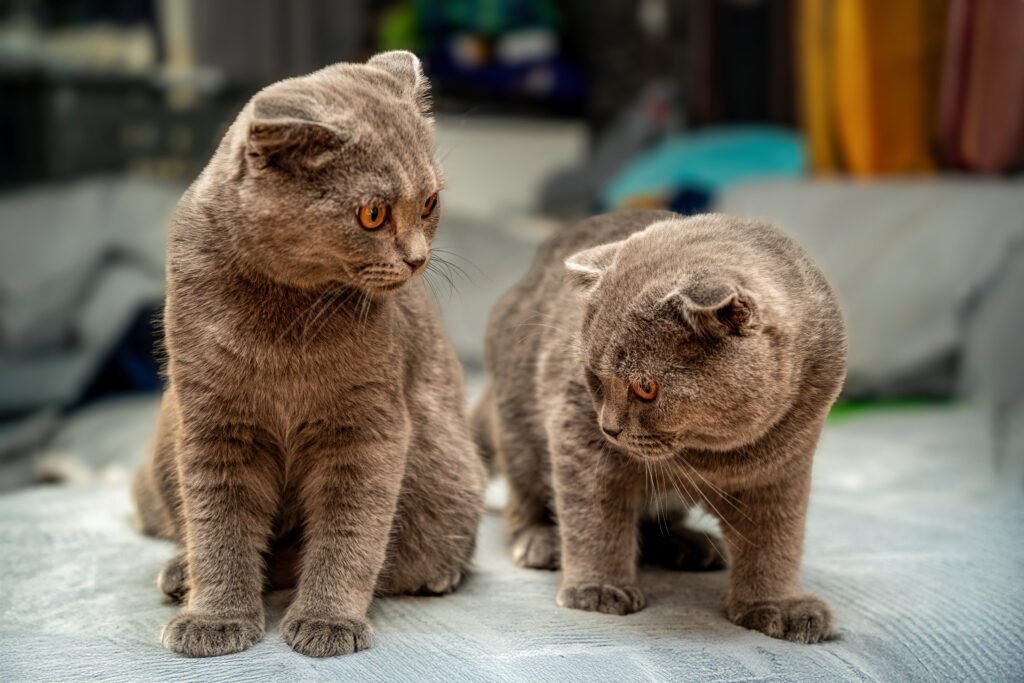
A cat’s ear shape can vary depending on its breed and genetic traits. Common types include:
- Upright ears: The pinna stands straight up. This is the most common ear shape.
- Semi-folded ears: The tips or upper parts of the ears bend slightly forward.
- Folded ears: The pinna folds noticeably forward.
- Curled ears: The pinna curls backward.
- Floppy ears: The cartilage is softer, giving the ears a looser, less upright shape.
These differences mainly involve the ear cartilage, the shape of the pinna, and the position of the ears. They do not mean that the basic divisions of the outer, middle, and inner ears have changed.
However, certain inherited ear traits may be associated with problems affecting cartilage, bones, or overall health. For this reason, you cannot determine a cat’s hearing ability or general health based on ear appearance alone.
Overall, the muscles of a cat’s ears give the pinna its remarkable flexibility, help cats detect and locate sounds more accurately, and allow them to communicate a wide range of emotional signals.
Cat ears are fascinating, but they can also collect dirt and become a place where parasites thrive. That is why regular ear checks and proper cleaning are essential parts of cat care.