
A cat’s tongue does much more than help them eat. Its rough surface works like a built-in grooming brush, its flexible tip helps draw water into the mouth, and its specialized structures play a role in how cats experience food. But what makes a cat’s tongue so rough? And can cats taste the same flavors we do?
In this guide, we’ll explore the structure of a cat’s tongue, the different types of papillae that cover it, and what research tells us about a cat’s sense of taste.
What Does a Cat’s Tongue Do?
Ever felt your cat lick your hand and wondered why their tongue feels like sandpaper? That rough texture isn’t a coincidence. It helps cats groom themselves, handle food, and perform several other everyday tasks.
A Built-In Grooming Comb
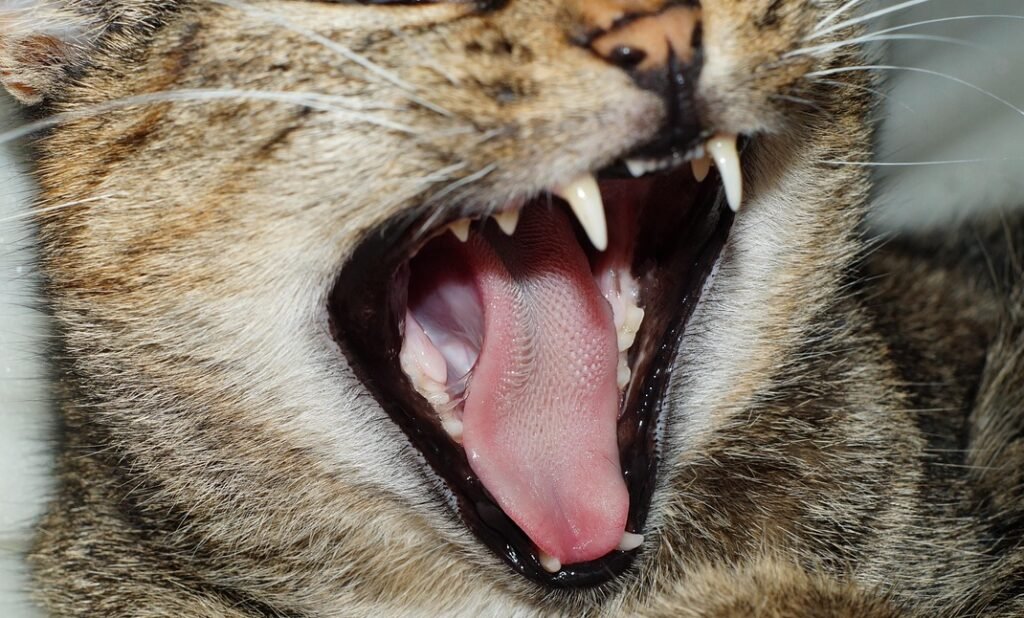
The middle of a cat’s tongue is covered with rows of tiny, backward-facing projections called filiform papillae. These stiff, hook-like structures help remove loose hair and debris as a cat grooms. They can also help scrape meat from bones, much like a small spoon.
When cats groom, loose hairs become trapped on their tongues and are swallowed. Much of this hair eventually passes through the digestive tract or is brought back up. However, swallowed hair can sometimes accumulate and form hairballs. Regular brushing helps remove loose fur before your cat has a chance to swallow it.
Learn more: Cat Grooming Tips Archives – Cat Care Life
Researchers and engineers have also taken inspiration from this natural design. In biomimicry, engineers study structures found in nature and adapt them for practical use. One example is a vacuum cleaner concept that uses tiny, cat-tongue-inspired projections on a spiral-shaped component. The projections help catch and gather debris, making it easier to collect.
The connection between cats and tongues even shows up in French baking. Langue de chat means “cat’s tongue” in French and refers to a thin, elongated cookie. The name comes from its resemblance to a cat’s tongue.
How Cats Drink Water
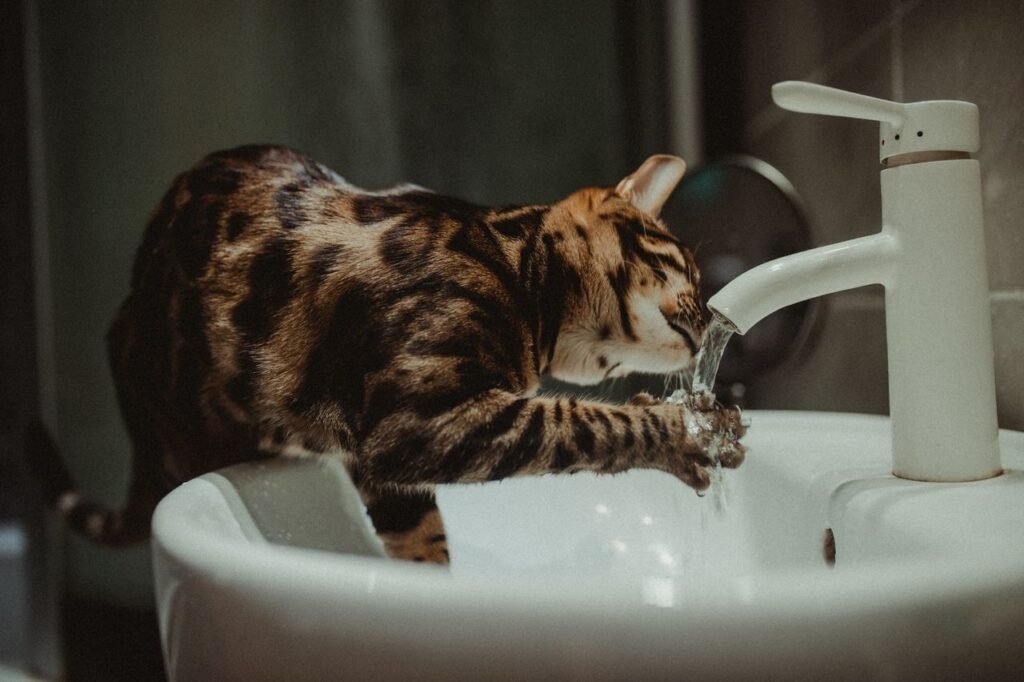
For years, scientists thought the small projections on a cat’s tongue helped it scoop up water. High-speed video revealed a more surprising technique: cats curl the tip of the tongue backward, touch the water’s surface, and quickly pull the tongue back into the mouth. The motion draws a column of water upward, and the cat closes its mouth at just the right moment to catch it.
In a 2010 study, MIT researcher Roman Stocker and his colleagues used high-speed imaging to investigate how cats drink. Their observations showed that:
- A cat’s tongue can move at speeds of up to 76.2 centimeters (30 inches) per second.
- Cats lap about three to four times per second.
- Each lap brings in roughly 0.14 milliliters of liquid.
- Only the tip of the tongue makes contact with the water.
The key is timing. As the tongue rises, inertia helps pull water upward, while gravity works to draw it back down. Cats appear to time each lap so they can catch the rising column of water before it falls.
Watch how it works:
A Temperature Guide for Food
Some people can’t stand food or drinks that are too hot, while others are happy to take a sip of steaming coffee. Cats have their own temperature preferences, too. They often prefer food that’s around room temperature or slightly warm rather than piping hot.
Cats are not necessarily unusually sensitive to heat. Unlike humans, who often eat foods served well above body temperature, cats typically eat prey or food closer to body temperature.
Research cited in the original source suggests that cats are particularly willing to eat food served at around 30–35°C (86–95°F). Once the temperature rises above that range, their willingness to eat may drop sharply.
The Papillae on a Cat’s Tongue
The tiny bumps and projections covering a cat’s tongue are called lingual papillae. Most mammals, including humans, have them, but their shape, size, and distribution vary from one species to another. These differences reflect the different demands placed on the tongue by each animal’s diet and lifestyle.
Broadly speaking, lingual papillae can be divided into two groups:
- Gustatory papillae, which contain taste buds and help detect chemical compounds in food.
- Mechanical papillae, which help grip, move, and process food. They can also protect the tongue’s surface and contribute to grooming.
Taste buds contain specialized sensory cells that respond to chemicals in food and drink. Tiny openings called taste pores allow those chemicals to reach the taste cells, which then send signals through sensory nerves to the brain.
Cats have several types of lingual papillae, each with its own structure and likely function. Let’s look at them one by one.
Filiform Papillae
Filiform papillae cover much of the central surface of a cat’s tongue. They are mechanical papillae rather than taste-bearing structures, and their pointed, backward-facing shape gives the tongue its characteristic rough texture.
All filiform papillae lean toward the throat. This arrangement helps cats move food around in the mouth and gives the tongue a comb-like surface for grooming.
Their size varies depending on where they are located. Near the front of the tongue, they measure about 0.1 millimeters across and 0.2–0.3 millimeters tall. In the middle, they become larger, reaching about 0.2–0.4 millimeters across and 0.5–0.8 millimeters tall. Farther back, they become smaller again.
The papillae near the front also have fine, branch-like projections. These become less noticeable as the papillae grow larger and disappear in the middle region.
Under a microscope, each filiform papilla has a layered structure. The side facing the front of the tongue contains more of the granular layer, while the side facing the throat has a more prominent keratinized layer. This keratinized surface is harder and may help the papillae catch and hold loose hair during grooming.
Between the papillae, researchers have observed tiny ridges called microridges. Unlike the outer surfaces of the papillae, these areas do not show the same degree of keratinization.
Scientists have proposed several possible functions for microridges. They may help the tongue cope with repeated friction or help retain and spread mucus across its surface. Because the ridges disappear as epithelial cells finish keratinizing, they may also be temporary structures associated with that process. Their exact role is not yet fully understood.
Microridges have also been described on the tongues of other animals, including ferrets, mongooses, bats, gerbils, guinea pigs, and dogs.
A 2018 study of cat filiform papillae proposed another possible function: the papillae may help distribute saliva over the coat. According to this hypothesis, capillary action helps retain saliva between the tiny structures, allowing it to spread across the fur during grooming. If so, the papillae may contribute not only to grooming but also to the way cats manage heat.
Fungiform Papillae
Fungiform papillae are rounded, mushroom-shaped structures that contain taste buds. In cats, they are found mainly along the edges of the tongue, with the greatest concentration near the tip. Researchers estimate that a cat has about 250 in total, with broadly similar numbers on the left and right sides.
Their size changes as cats grow. In kittens, fungiform papillae measure about 0.15 × 0.18 millimeters; in adult cats, they measure about 0.42 × 0.55 millimeters (Robinson, 1990).
A smaller number also appear among the filiform papillae in the central region of the tongue. Researchers have reported around 15–17 in this area. Near the back third of the tongue, just before the vallate papillae, the number drops to about 10.
Their diameter varies by location, too. Near the tip of the tongue, fungiform papillae average about 0.28 millimeters across. Farther back, they become larger, reaching an average diameter of about 0.48 millimeters.
Each fungiform papilla has an epithelial covering that includes a keratinized layer. Taste pores open onto its surface, allowing chemicals from food and drink to reach the taste buds. When these chemicals activate sensory cells, the cells generate signals that travel along nerve fibers to the brain.
The number of taste buds in each papilla also varies. Those near the tip contain an average of 6.9 taste buds, while those farther back average about 16.6.
In other words, the front of the tongue has more fungiform papillae, but each contains fewer taste buds. Farther back, there are fewer papillae, but each one tends to contain more taste buds.
Newborn kittens have relatively few fungiform papillae and taste buds. Their numbers increase during development and approach adult levels at around two to four months of age.
Researchers have also found that fungiform papillae can shrink when the chorda tympani—the nerve that carries taste information from this region—is cut. When the nerve recovers, the papillae can recover as well. This suggests that nerve connections help maintain the papillae’s normal structure.
Cats and humans do not experience every taste in the same way. To understand why, it helps to look at the other types of papillae and how cats detect different flavors.
Vallate Papillae
Vallate papillae, also called circumvallate papillae, are large, rounded or oval structures near the back of the tongue. In adult cats, they measure approximately 0.65 millimeters long, 0.9 millimeters wide, and 0.58 millimeters high. In kittens that have not yet been weaned, they are smaller, measuring about 0.25 × 0.42 × 0.15 millimeters (Haddad, 2019).
Cats typically have four to six vallate papillae. They sit near the boundary between the body and root of the tongue and are often arranged in a V shape, with the point facing toward the throat. The arrangement may be symmetrical in some cats and less so in others.
The surface tissue, or epithelium, is layered and partly keratinized. A groove surrounds each papilla, separating it from the neighboring tissue. This surrounding trench is an important feature of vallate papillae.
One key difference between vallate and fungiform papillae is where their taste buds are located. Fungiform papillae have taste buds on their upper surfaces, while vallate papillae have taste buds mainly along their sides, facing the surrounding trench.
Foliate Papillae
Foliate papillae are relatively large structures found along the back sides of the tongue. Their surface tissue forms layers, and the ridges extend down into the underlying connective tissue.
Their function in cats is still uncertain. Some studies have reported that cat foliate papillae lack taste buds, leading researchers to suggest that they may serve a mechanical rather than a gustatory role. However, foliate papillae in other mammals can contain many taste buds. Researchers have reported abundant taste buds in the foliate papillae of Japanese black bears, raccoons, and silver foxes. Humans, crab-eating macaques, rats, mice, and hamsters also have well-developed foliate papillae.
These differences have led some researchers to suggest that foliate papillae may have become reduced in certain highly specialized diets, including those of strict carnivores such as cats and strict herbivores such as goats and cattle (Robinson, 1990). This remains a proposed explanation rather than a settled conclusion.
Marginal Papillae in Kittens
Marginal papillae are irregularly shaped projections found along both sides of the tongue tip in very young kittens. They may look like small leaves, fingers, or triangular cones. Their surface is covered with a highly keratinized layer of stratified squamous epithelium, and they measure about 0.05–0.1 millimeters tall (Haddad, 2019).
These papillae are temporary structures. Similar ones have been described in several other mammals, including humans, dogs, pigs, whales, and dolphins. Researchers suspect that marginal papillae may help newborns latch onto a nipple while nursing. They may also help keep milk from flowing back out of the mouth.
As the young animal grows, the marginal papillae gradually disappear. In kittens, this process begins at around two weeks of age, and the structures are eventually replaced by the more typical fungiform and filiform papillae.
A Cat’s Sense of Taste
Taste begins when chemicals in food or drink interact with sensory cells. In humans, five basic tastes are widely recognized: sweet, salty, sour, bitter, and umami.
Do cats experience those tastes in the same way we do? Research into feline anatomy, taste nerves, and taste receptors suggests that their sensory world differs from ours in several important ways.
One clarification: spiciness is not technically a taste. The burning sensation caused by chili peppers is mainly associated with sensory pathways involved in pain and temperature. It is included here because it is often discussed alongside taste.
As noted earlier, cats lack a functional sweet-taste receptor of the kind found in humans, and their response to salt is relatively limited. Their sense of taste is therefore different from ours—not simply a less sensitive version of the human experience. Cats have sensory systems adapted to their own biology and feeding habits.
Sweetness: Why Cats Aren’t Drawn to Sugar
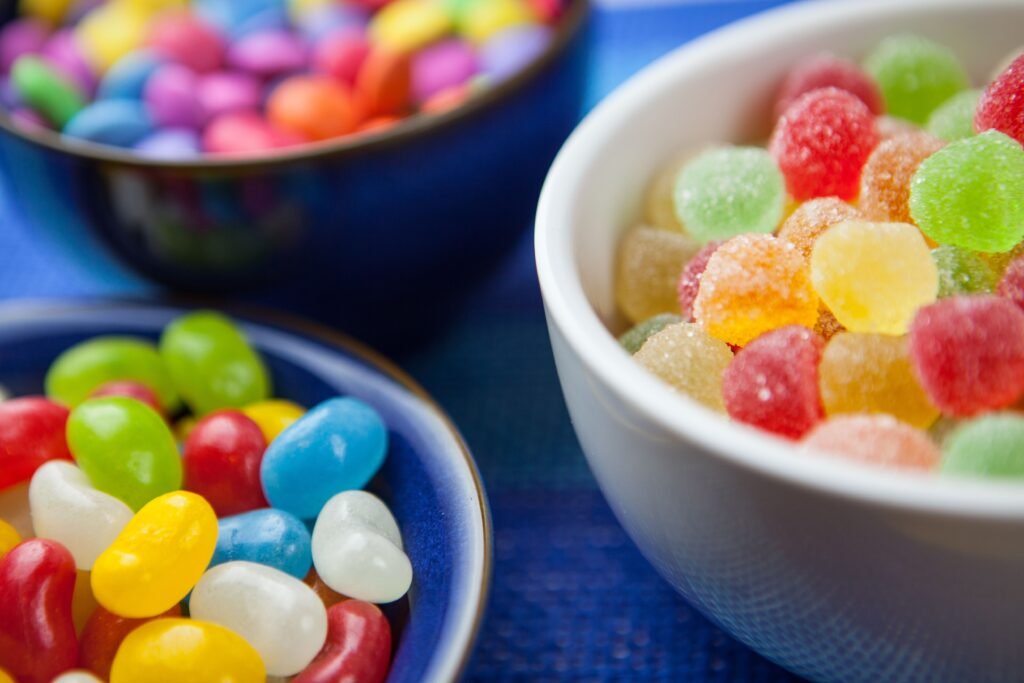
Sweetness is the taste associated with sugars and certain other compounds. Humans and dogs can detect a wide range of sweet substances, but cats do not respond to sweetness in the same way.
Researchers at the Monell Chemical Senses Center investigated two genes involved in forming the mammalian sweet-taste receptor: Tas1r2 and Tas1r3. They found that the cat’s Tas1r3 gene appears functional, but Tas1r2 is a pseudogene—a gene that no longer produces a functional product. Without the T1R2 protein, cats cannot form the usual T1R2/T1R3 sweet-taste receptor (Li et al., 2006).
In practical terms, cats lack the functional receptor that humans use to detect sweetness. This helps explain why cats generally show little interest in sweet-tasting foods, although individual food preferences can depend on smell, texture, fat, protein, and other factors.
The same genetic change has been identified in other members of the cat family, including tigers and cheetahs. Researchers believe these species are also unable to detect sweetness in the usual way.
For an obligate carnivore, the ability to detect sugar may be less important than the ability to recognize the amino acids and other compounds found in animal tissue.
Saltiness: Can Cats Taste Salt?
Saltiness is most commonly associated with sodium chloride (NaCl), or table salt.
That does not mean cats are completely unable to respond to salty substances. Sensory units that normally respond to amino acids and nucleotides can also respond to sodium chloride and potassium chloride. However, the reported detection threshold is above 50 millimolar (mM), or roughly 0.3% for sodium chloride. This suggests that cats are relatively insensitive to salt compared with animals that have a more specialized salt-detection mechanism.
Scientists once proposed that meat-eating animals had a separate type of nerve unit dedicated to salt. Later interpretations suggested that the response might instead come from sensory units that primarily detect amino acids but also react to salt at higher concentrations.
Sourness: A Different Sensitivity Across the Tongue
Sourness is associated with acids and the hydrogen ions they release.
Researchers have reported differences among species in how many fungiform papillae are served by a single taste nerve fiber known as the chorda tympani. The reported averages are about 5.4 papillae in goats, 3.4 in dogs, and 3 in cats.
The location of sour sensitivity also varies. Rats and goats appear more sensitive to sour stimuli near the front of the tongue, while cats show greater sensitivity toward the back. In the image below, the yellow areas indicate the regions reported to respond to sour substances.
The sensory fibers involved in sour taste can carry signals quickly. In studies of dogs and cats, the response to a sour stimulus is strong at first but then fades relatively quickly. One possible explanation is that these animals may reject an unpleasant food soon after tasting it, so a prolonged response may not be necessary. That explanation is a hypothesis, however, rather than a proven reason for the response pattern.
In one study, researchers measured the response of feline taste units to a range of compounds at a concentration of 50 mM (Boudreau, 1985). The list below follows the order reported in the source, from stronger to weaker responses.
Substances reported to trigger responses in cat sour-sensitive taste units
- Malic acid
- ATP (adenosine triphosphate)
- ITP (inosine 5′-triphosphate)
- Sodium phosphate
- O-phosphoethanolamine
- L-histidine
- IDP (inosine 5′-diphosphate)
- Butyrylcholine chloride
- L-cysteine
- L-tryptophan
- L-proline
- L-isoleucine
- Tetrasodium pyrophosphate
- Phytic acid
- L-arginine
- L-lysine
- IMP (inosine 5′-monophosphate)
The study reported especially strong, sustained responses to malic acid (pH 2.2), ATP (pH 3.0), ITP (pH 2.8), sodium phosphate (pH 4.64), and L-histidine (pH 7.4). Because these compounds do not all produce acidity in the same way, the findings are best understood as responses of particular sensory units—not as a simple ranking of how sour each substance would taste to a person.
Researchers once proposed that cats had a special type of “water-sensing nerve fiber” that responded specifically to water (Cohen, 1954). However, the sensory units described as sour-sensitive were also reported to respond to distilled water and quinine, a bitter compound. This overlap led researchers to suggest that the two responses might involve the same sensory structures.
Bitterness: Detecting Potentially Harmful Compounds
Bitterness is associated with a wide range of compounds, including alkaloids, terpenes, glycosides, some amino acids, and some peptides.
Humans can detect certain bitter compounds at very low concentrations. For comparison, sucrose may be detectable at around 0.7%, table salt at about 0.055%, and quinine—a classic bitter compound—at approximately 0.00005% (Hagiwara, 1980). These figures illustrate how sensitive the human sense of taste can be to certain bitter substances.
Cats also respond to compounds such as quinine, caffeine, and tannic acid. In research on feline taste nerves, one group of taste-related sensory units has been called the Xb unit. These units respond to a range of chemical stimuli and have been associated with bitter-taste responses (Boudreau, 1985).
The source study lists a variety of compounds that can trigger responses in these units, including:
Compounds reported to trigger responses in cat taste units
- Phosphorus-containing compounds
- Butyrylcholine chloride
- Malic acid
- Phytic acid
- Acetylacetone
- p-Hydroxyphenylacetic acid
- Vanillin
- Methyl maltol
- Lactones
- Quinine
- Caffeine
- Tannic acid
- Bile salts
- Deoxycholic acid
- Taurocholic acid
These results should not be read as a straightforward list of substances that all taste bitter to cats. Individual nerve units can respond to more than one kind of chemical stimulus, and a laboratory response does not always tell us exactly how an animal experiences a substance.
The source research also suggests that some bitter-responsive areas are concentrated toward the front of the cat’s tongue. One possible explanation is that early detection may help an animal reject potentially harmful substances before swallowing them.
In 2015, researchers at the Monell Chemical Senses Center investigated genes involved in producing bitter-taste receptors, known as Tas2r genes. They found that 12 of the relevant genes remained functional in cats. This supports the idea that cats have a substantial capacity to detect a range of bitter compounds.
Umami: Why Cats Respond to Amino Acids
Umami is the savory taste associated with certain amino acids and nucleotides. It was identified as a distinct taste by Japanese chemist Kikunae Ikeda in 1908, after he isolated glutamate from kombu broth. Other well-known umami compounds include inosinate, found in foods such as bonito flakes, and guanylate, found in shiitake mushrooms.
Umami is now widely recognized as the fifth basic taste in humans. Research into taste receptors, including the discovery of glutamate receptors in taste cells, helped establish its biological basis.
Cats have taste-sensitive nerve units that respond to amino acids and nucleotides. These are often called amino acid units in studies of feline taste physiology (Boudreau, 1985). In cats and dogs, they are found in several areas of the tongue, with particularly strong representation among the fungiform papillae near the tip.
Rats have similar sensory responses in the middle of the tongue and on the roof of the mouth. The cited research reported no equivalent amino-acid-sensitive mechanism in goats, which are herbivores.
The average number of fungiform papillae served by a single taste nerve was reported as about 3.2 in cats, 4.1 in dogs, and 4.6 in rats. In both cats and dogs, the response to a stimulus begins to decline after about a second. The nerve fires less frequently, and the animal gradually adapts to the stimulus.
Amino acid units can respond strongly to compounds containing nitrogen or phosphorus, including certain nitrogen-containing ring compounds, sodium phosphate, sodium pyrophosphate, nucleotide diphosphates and triphosphates, and some amino acids. Other compounds can inhibit these responses, depending on the sensory unit and the substance involved.
The following amino acids were reported to trigger particularly strong responses in cats (Boudreau, 1985):
Amino acids that trigger strong responses in cats
- Proline
- Cysteine
- Ornithine
- Lysine
- Histidine
- Alanine
By contrast, the following amino acids were reported to produce weaker responses or to inhibit the response of particular sensory units:
Amino acids with weaker or inhibitory responses
- Tryptophan
- Isoleucine
- Leucine
- Arginine
- Phenylalanine
These lists describe responses in specific experimental systems. They should not be interpreted as a complete ranking of which amino acids cats prefer to eat.
In 2017, a team of French and British researchers studied a laboratory model of the cat’s amino acid receptor, focusing on the N-terminal region of feline T1R1. They reported that the receptor could bind to six amino acids, with particularly strong binding to alanine and isoleucine. Cysteine did not bind in the same way. The researchers also found that small amounts of IMP and GMP could affect binding, with IMP producing especially notable changes for histidine, followed by alanine, isoleucine, and arginine.
In humans, L-glutamate and L-aspartate are recognized as umami-related amino acids. The feline receptor findings suggest that cats may detect a broader range of amino-acid signals through this system. That would make sense for obligate carnivores, whose diets depend heavily on animal protein.
It is tempting to conclude that cats experience a richer or more complex umami sensation than humans do. However, receptor binding alone cannot tell us exactly how a cat experiences flavor. The idea that cats perceive a broader range of umami sensations remains a hypothesis.
What Makes Food Taste Richer?
Some foods taste fuller, richer, or more satisfying than others, even when they aren’t noticeably sweeter or saltier. Scientists study how certain compounds can enhance the overall flavor of food, making savory notes seem more pronounced and the taste experience feel more complete.
In 2021, researchers investigated whether cats respond to some of these flavor-enhancing compounds in the same way humans do. They focused on the calcium-sensing receptor (CaSR), a protein that may help detect certain compounds in food. Using computer modeling, laboratory experiments, and taste-preference tests with cats, the researchers examined how cats responded to different combinations of amino acids and other compounds.
The results suggested that cats respond to some of these compounds differently from humans. Cats showed greater acceptance of an amino acid mixture when calcium chloride was added, but showed little interest in glutathione on its own. This suggests that a compound’s effect on food acceptance may depend on the other ingredients it is combined with.
The researchers also found evidence of CaSR expression in the vallate papillae, the large taste-related structures near the back of a cat’s tongue. This offers a clue about how cats detect certain food compounds, although more research is needed to understand how this receptor influences their food preferences.
Spiciness: Can Cats Feel the Burn?
Spiciness is not a basic taste. The burning sensation caused by chili peppers comes largely from the activation of sensory pathways associated with pain and heat.
In one study, researchers stimulated cats’ tongues with electrical stimulation or capsaicin, the compound responsible for the heat of chili peppers. They observed an increase in blood flow to the cats’ lips, suggesting that these stimuli activated a reflex involving sensory and autonomic pathways (Karita, 1993).
The exact nerve pathways involved are complex. Researchers have investigated signals carried from the tongue and throat toward the brain, as well as the pathways that control changes in blood flow to the lips. For a general reader, the key point is that cats can show a measurable physiological response to capsaicin, even though this does not tell us precisely how they consciously experience the sensation.
So, could a cat experience something similar to the “That’s hot!” feeling a person gets from eating chili? Possibly—but the evidence is not enough to describe the sensation in human terms. What we can say is that capsaicin can trigger a response in cats and that this response involves pathways associated with irritation, pain, and temperature rather than taste alone.
Sensation Deep in a Cat’s Throat
We usually think of taste as something that happens on the tongue. In cats, however, sensory structures that respond to chemical stimuli are also found deeper in the throat.
The larynx—the structure at the entrance to the windpipe—contains papilla-like structures and taste buds. They are especially numerous on the laryngeal surface of the epiglottis, behind the vocal folds, and in the laryngeal ventricles. These areas are shown in light blue in the image below (Hatakeyama, 1960).
The number of taste buds in this region changes as kittens grow. One study reported about 76 taste buds on the epiglottis of a one-week-old kitten. In cats older than one year, the number could reach approximately 800 (Stedman, 1983).
Researchers have also studied the responses of the superior laryngeal nerve, which carries sensory information from the laryngeal region. Using electrophysiological methods, they found responses to potassium chloride, hydrochloric acid, ammonium chloride, distilled water, and citric acid. The nerve showed no clear response to sodium chloride or lithium chloride under the conditions tested (Stedman, 1980).
Studies have identified two broad response patterns among sensory units in the larynx. Fast-response units react quickly to stimuli such as water, milk, stomach contents, saliva, and isotonic sucrose solutions. They may begin responding in less than a second and reach peak activity within one to three seconds. Slow-response units take several seconds to respond, and their activity can continue even after the stimulus has been removed.
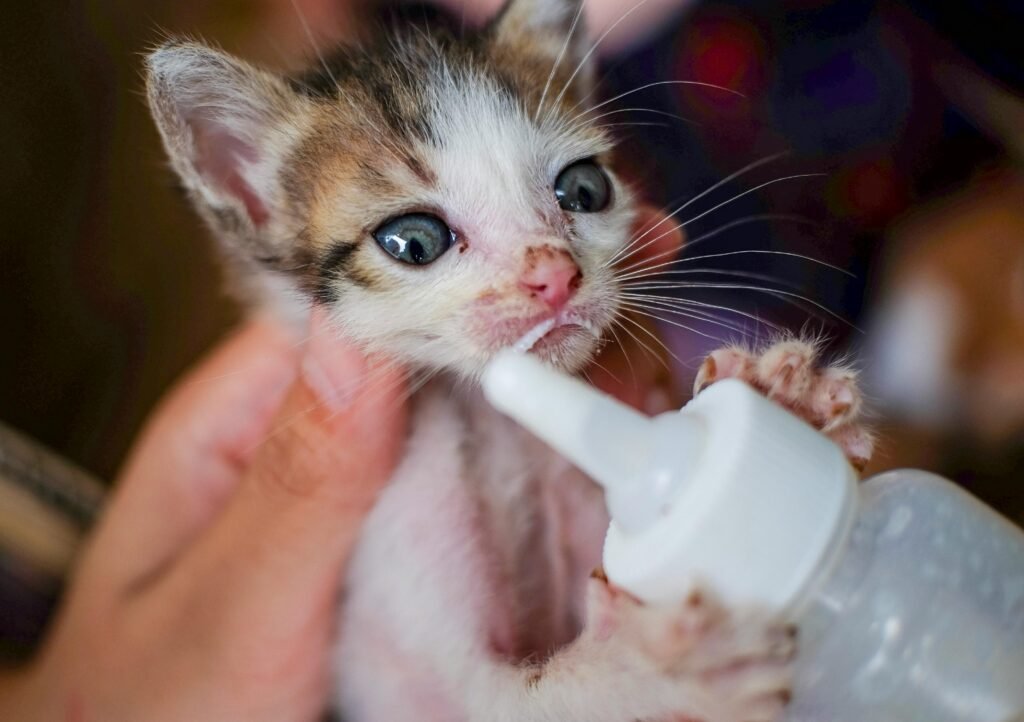
Both types of sensory units are present in newborn kittens, and both respond to water. Researchers have proposed that these structures help detect material entering the larynx and trigger protective reflexes, including coughing and apnea—a brief pause in breathing. These reflexes can help prevent milk or formula from entering the windpipe and lungs, protecting a kitten’s developing airways (Harding, 1978).
In other words, chemical sensing in this part of the throat may serve a purpose beyond flavor. It may help a kitten detect what is entering the airway and respond before liquid travels farther into the respiratory tract.