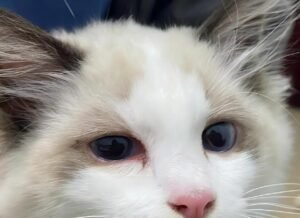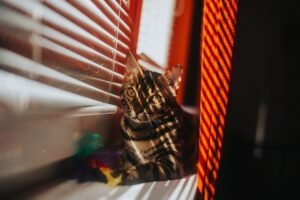

When you look at a cat with crossed eyes, you might wonder: Can cats actually see normally with their eyes pointing inward?
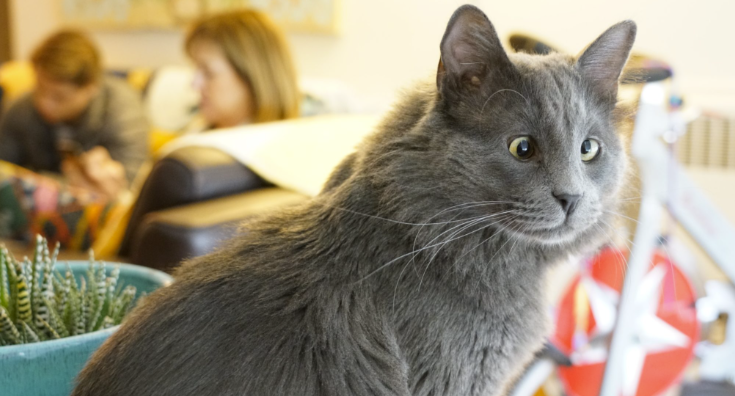
Belarus, a former stray cat, became an internet sensation after being adopted because of his unique crossed-eye appearance and charming personality. His adorable look made many people curious about why some cats develop this unusual eye condition.
So, why do some cats have crossed eyes? Does it affect their vision? And when should cat owners be concerned?
Let’s take a closer look.
What Causes Crossed Eyes (Esotropia) in Cats?
Crossed eyes, medically known as esotropia, occur when one or both eyes point inward instead of looking straight ahead.
This condition is seen more frequently in Siamese cats and some cats with albinism.
The reason is related to how their visual system develops. In normal cats, the nerves that carry visual information from the eyes to the brain are arranged in a specific pattern, allowing both eyes to work together and create depth perception.
However, in Siamese cats and cats with albinism, some of these nerve connections develop differently. Instead of sending visual information along the usual pathway, some signals are redirected incorrectly.
As a result, the brain receives slightly different visual information from the two eyes, which can lead to esotropia (crossed eyes).
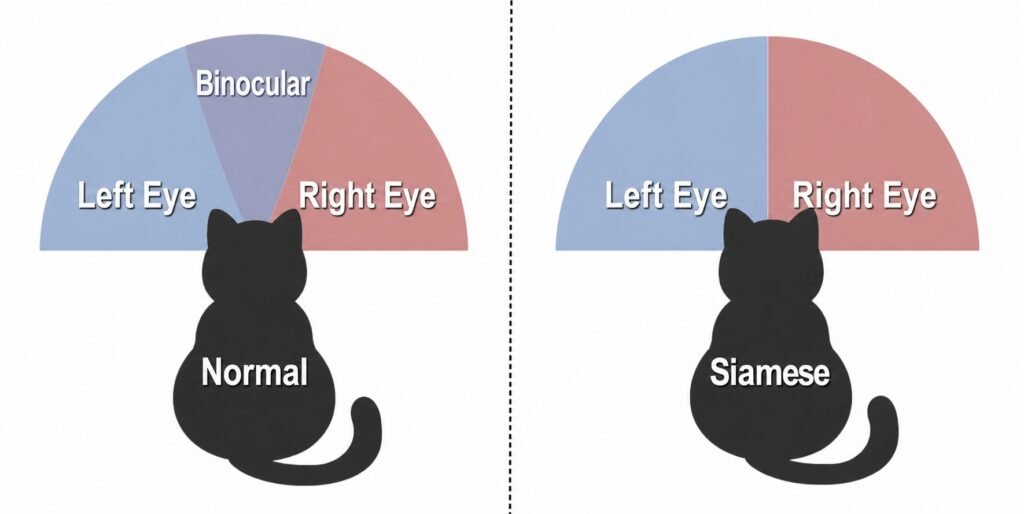
Because their eyes do not always work together perfectly, some affected cats may have reduced depth perception, meaning they may not judge distances as accurately as other cats.
This can make activities such as jumping from high places or navigating unfamiliar environments slightly more challenging.
Can Cats with Crossed Eyes See Normally?
The good news is that many cats with naturally occurring crossed eyes can live completely normal lives.
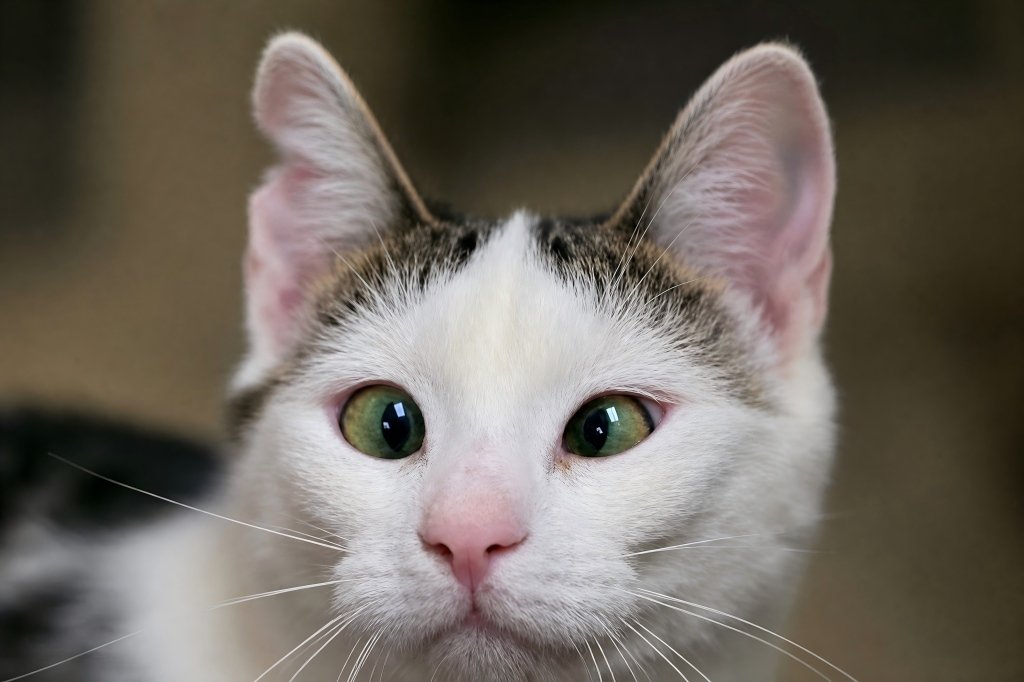
Cats are incredibly adaptable animals. When a kitten develops strabismus at a young age, its brain can often adjust and learn to compensate for the difference in visual input.
A 1980 study from the University of California examined how cats adapted after developing strabismus. Researchers tested the cats’ ability to judge distances by observing how accurately they could jump onto a platform.
Healthy cats typically landed near the center of the platform, while cats with newly developed strabismus initially landed off-center.
However, after several weeks of adaptation:
- Young cats that developed strabismus around 4 months old improved their jumping accuracy and were able to land normally.
- Some cats that had lived with strabismus for several months performed well from their first attempt, suggesting they had already developed their own way of compensating.
This shows that young cats have a remarkable ability to adapt without special training.
However, this ability becomes much weaker when strabismus develops later in life.
Can Crossed Eyes Cause Vision Problems in Cats?
Although many cats with congenital (present from birth) crossed eyes do well, strabismus that appears later may affect vision.
Studies from the 1980s found that cats with strabismus could develop amblyopia, commonly known as lazy eye.
In affected cats, the brain may gradually rely less on input from the misaligned eye, causing reduced vision in that eye.
Some cats that developed strabismus later in life experienced:
- Reduced vision
- Difficulty navigating their surroundings
- Less willingness to move or explore
- Changes in behavior or mood
For this reason, sudden changes in eye alignment should always be taken seriously.
When Should You Take Your Cat to the Vet?
If your cat has had crossed eyes since kittenhood, especially if your cat is a Siamese, this may simply be a normal variation and may not affect their quality of life.
However, a cat that suddenly develops crossed eyes should be examined by a veterinarian. A change in eye position can sometimes be linked to problems involving the eyes, nerves, or other health conditions.
Contact your veterinarian if you notice:
- A sudden change in your cat’s eye alignment
- Trouble jumping or judging distances
- Bumping into objects more often
- Changes in behavior or activity levels
- Squinting, redness, discharge, or signs of eye discomfort
Most cats with lifelong crossed eyes learn to adapt and continue to enjoy normal daily activities. The key difference is whether the condition has always been present or appears suddenly.