
Once you’re ready to welcome a new kitten into your home, it’s crucial to prepare all the necessary supplies and understand the basic care methods. This includes everything from bottle-feeding techniques and litter box training to proper socialization. Providing thorough kitten care ensures your little feline friend grows into a healthy and happy cat.
Preparing the Essential Space and Time
Before bringing a kitten home, prospective owners need to meet several fundamental conditions:
First, you must have enough time to dedicate to their meticulous care. For kittens aged 0-3 months, it’s highly recommended to provide full-time supervision and companionship. Second, ensure you have a designated space where the new kitten can be isolated from any existing cats in your household. This helps with a smooth introduction and prevents potential conflicts or stress. Lastly, it’s vital to have an environment where temperature and humidity can be regulated. Kittens are very sensitive to their surroundings, and maintaining a stable climate is key to their well-being.
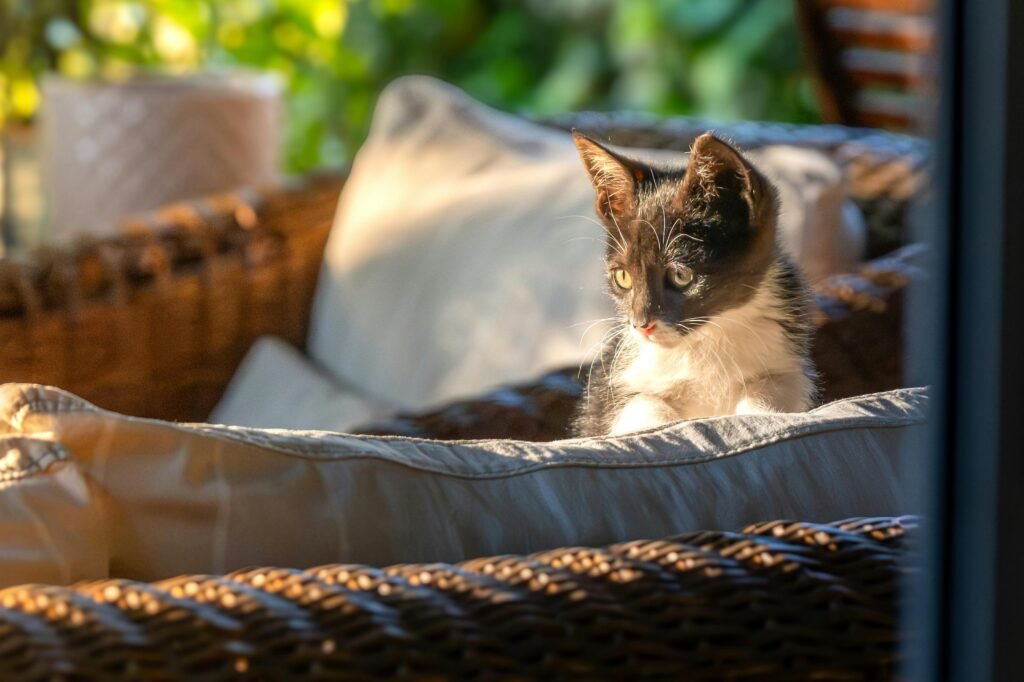
If these conditions aren’t met and you rush into adopting a kitten, it could lead to difficulties for the kitten, your resident cats, and even yourself.
Essential Supplies for Kitten Care
Regardless of how you encounter a kitten, the following items are absolutely essential to have on hand.
Feeding Supplies
To provide kittens with the necessary nutrition and hydration, kitten formula is indispensable. As a general rule, avoid using regular cow’s milk or human baby formula.
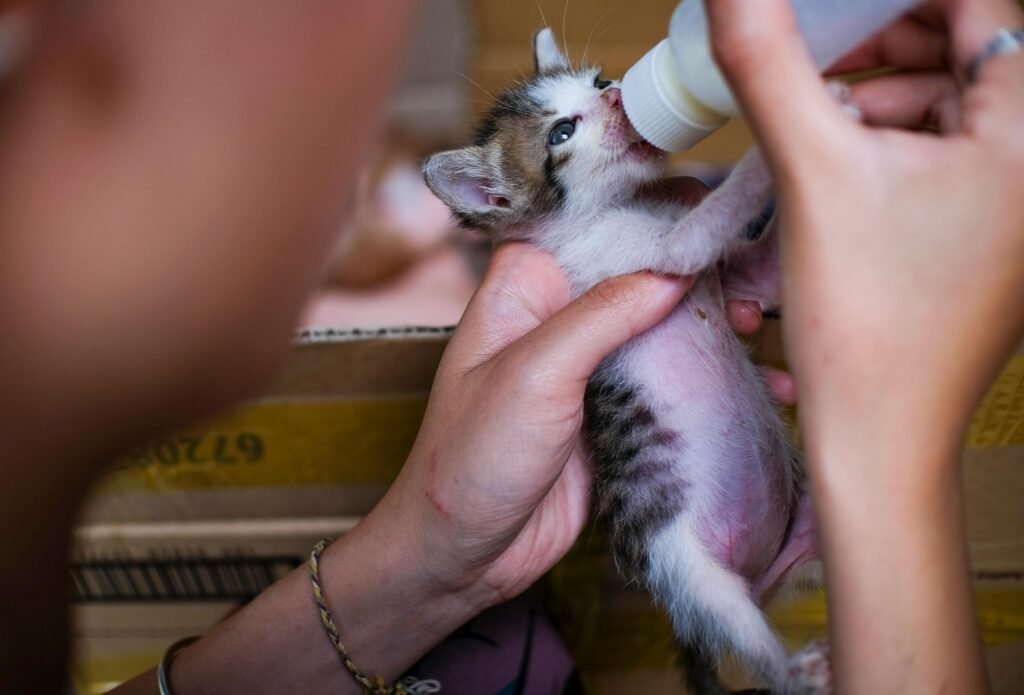
•Kitten-Specific Formula
You’ll need either pre-mixed liquid formula or powdered kitten formula. Additionally, prepare purified or filtered water for mixing the powdered formula.
•Bottles
Use small, kitten-specific feeding bottles. It’s a good idea to have 2-3 extra nipples on hand, as sometimes the openings can be tricky to cut correctly.
•Measuring Spoons or Syringes
These are used to measure the correct amount of formula for each feeding. While small syringes can work, measuring spoons are often more convenient for cleaning and maintenance.
•Bedding and Sleeping Area Supplies
Kittens have a relatively large surface area, thin subcutaneous fat, and underdeveloped autonomic nervous systems and skin barriers, making them prone to hypothermia or overheating. Therefore, it’s crucial to provide a temperature-stable sleeping environment to help them regulate their body temperature.
•Enclosed Box or Carrier
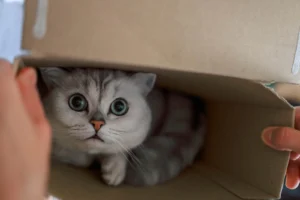
Prepare a box or carrier with sides high enough to prevent the kitten from climbing out. For very young kittens, a clear storage bin is often most convenient as it allows you to observe them easily. As they grow, you can transition to a pet playpen (either fixed or foldable).
•Blankets and Towels
Line the bottom of the box with a fleece blanket or cover the top with a towel to help maintain warmth. Be careful to avoid direct drafts from air conditioners or air purifiers blowing into the box. Since towels will need to be washed daily, make sure to have several spares.
•Comfort Toy (Snuggle Buddy)
Provide a soft toy for the kitten to snuggle with, which can offer a sense of security. This mimics the feeling of cuddling with their littermates. If using a human baby toy, choose one without rattles or small, detachable parts.
•Heating Pad / Hot Water Bottle
It’s recommended to use a pet-specific, low-temperature heating pad (one that doesn’t automatically shut off) and place it under only half of the sleeping area. Cordless options, such as microwaveable heat packs or rechargeable products, are ideal. Leaving half the area unheated allows the kitten to move away if they get too warm. If using a human hot pack or a hot water bottle, always wrap it in a towel before placing it with the kitten.
•Thermometer and Hygrometer
Install these inside the kitten’s enclosure to monitor the ambient temperature and humidity. Small, compact devices are recommended.
Kitten Grooming and Health Monitoring Supplies
It’s essential to continuously observe your kitten’s health and record their development daily. Additionally, since very young kittens cannot excrete on their own, you’ll need to assist them with elimination.
•Wet Wipes
You’ll use a lot of these for wiping off formula residue, cleaning around their anal area, and general hygiene.
•Digital Scale / Measuring Tools
This is crucial for weighing your kitten and accurately mixing formula. Please get a digital scale that can measure in grams, rather than a spring scale. Also, prepare a deep-sided container to place the kitten in for stable weighing.
•Thermometer
Ideally, rectal temperature can be taken, but this can be stressful for kittens. Therefore, a non-contact infrared thermometer designed for infants is a good alternative.
•Litter Box
Once your kitten can eliminate on their own, you’ll need a litter box. A shallow tray, like a plastic storage container, can serve as a temporary litter box. For litter, it’s best to choose a non-clumping type that won’t stick to their paws. If non-clumping isn’t available, opt for a fine-grained, unscented litter. The key for kitten litter training is a low-entry container combined with non-clumping litter.
Proper Kitten Feeding Techniques
If a mother cat is present, she will instinctively nurse her kittens. Your role as the owner is to provide her with plenty of food to prevent nutritional deficiencies and to weigh the kittens daily to monitor their growth. The following are general bottle-feeding methods applicable to kittens of various ages.
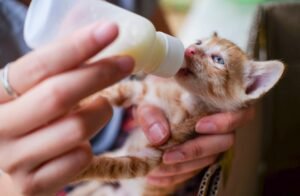
Before handling feeding tools or the kitten, always wash your hands thoroughly. The bottle nipple should be cleaned completely to remove any plastic smell. If you need to enlarge the nipple hole with scissors, cut it in a cross shape or diagonally. A hole that’s too small will make it difficult for the kitten to suckle, while one that’s too large can cause formula to flow out too quickly. The correct standard is: when you gently squeeze the bottle, the formula should drip out
drop by drop.
When feeding, gently shake the bottle to ensure the powder is fully mixed and there are no clumps, but avoid shaking too vigorously to prevent splashing. Never feed a kitten on its back, as this can lead to aspiration pneumonia if formula enters their lungs. Always keep the kitten in a
prone position, belly down. Placing a towel on your lap can help stabilize the kitten during feeding.
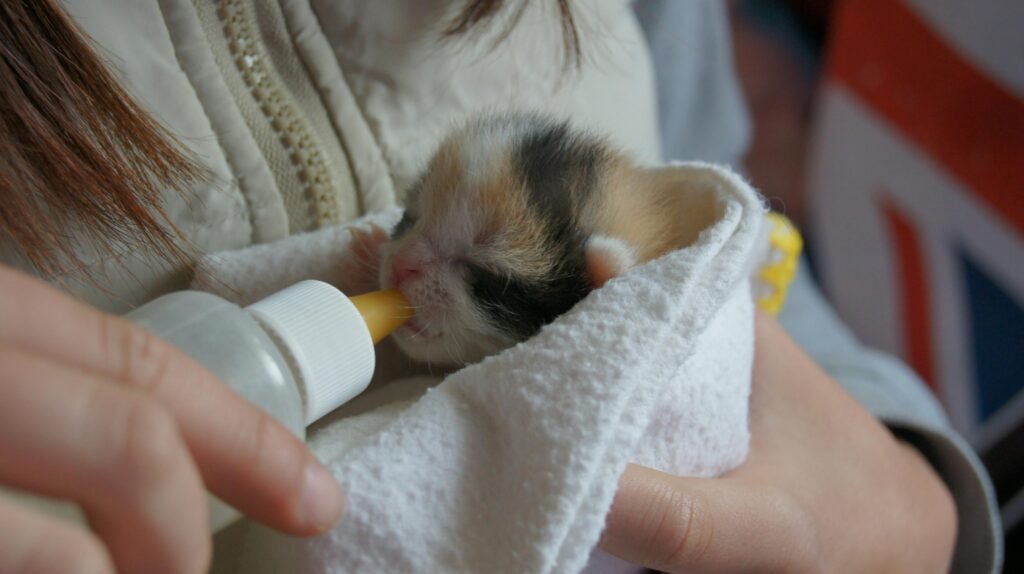
Always maintain a prone position during feeding. Gently support the kitten’s neck from behind with your hand and bring the nipple close to its mouth. Kittens will instinctively start suckling, so there’s no need to forcefully squeeze the bottle. Use your fingertip to feel their throat, confirming they are continuously swallowing. Kittens will often knead with their front paws, which is a natural instinct known as “milk treading.” If their claws are bothersome, you can move your hand to the side of the kitten’s neck.
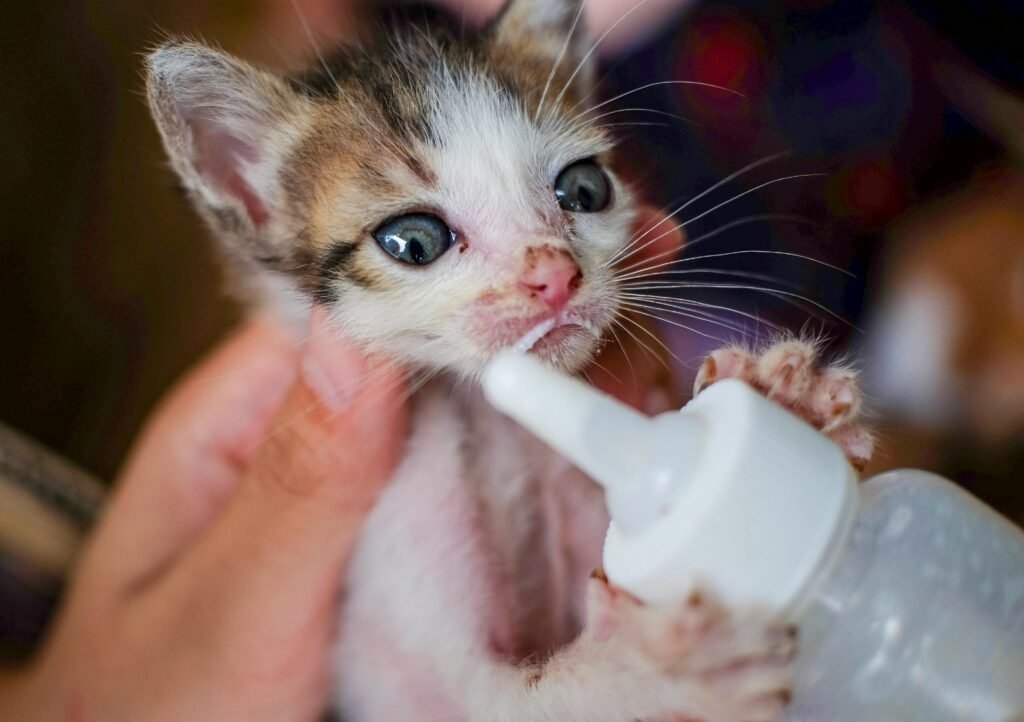
When foam appears around the kitten’s mouth or unconsumed milk dribbles out, it’s a sign that they are “full.”
Kitten Litter Box Training
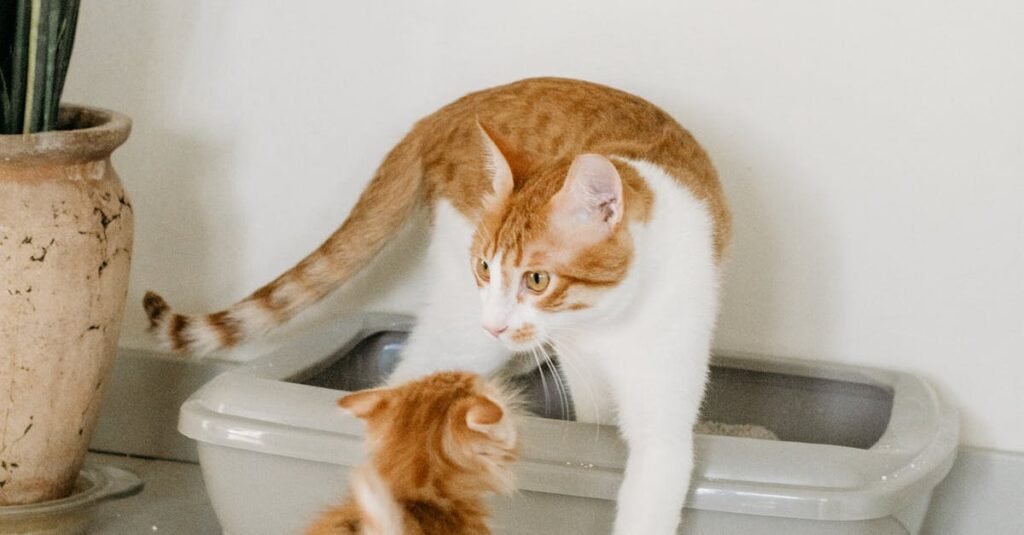
It’s important to remember that newborn kittens cannot eliminate on their own, so you’ll need to assist them until they are about three weeks old. After three weeks, we need to gently guide them to use a litter box.
Place the litter box in a quiet, easily accessible location. After meals or naps, take your kitten to its litter box. Keep it clean daily, as cats dislike dirty litter boxes and may refuse to use them. If accidents happen, do not punish your kitten. Instead, be patient and consistent—they will learn quickly.
Kitten Socialization
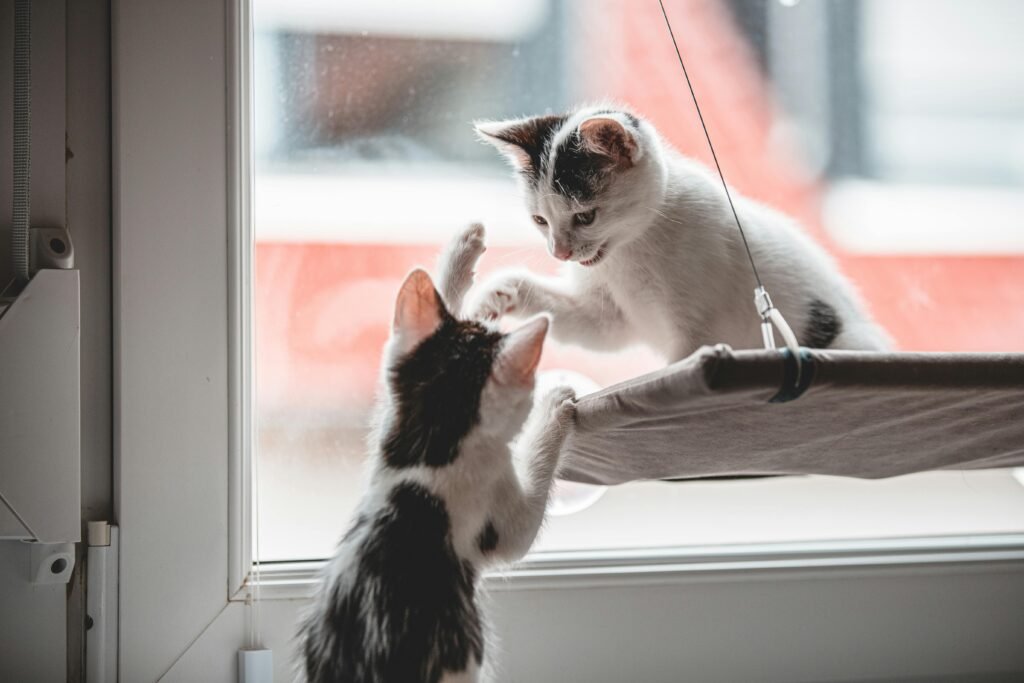
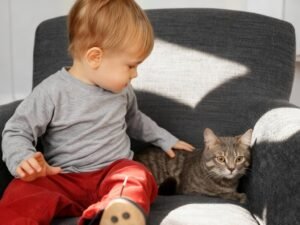
Notably, the socialization period begins around the second week of life (8 days old). This is a critical stage for shaping a cat’s personality. It’s believed that if a kitten has ample contact with littermates, other animals, and humans during this period, it will develop into a friendly and sociable cat in the future. The socialization period is relatively short, ending around 7 weeks of age, so careful consideration of how to care for kittens during this time is essential.
To raise a friendly cat, it’s recommended that kittens aged 2-7 weeks have at least one hour of daily interaction with humans.
During the socialization phase, the presence of littermates is very important for both “social learning” and “aggression inhibition learning.”
Social Learning
“Social learning” refers to cats learning by observing and imitating the behavior of other cats. For example, when one kitten intently stares at prey, other kittens will often mimic the same behavior. During the socialization period, this “imitative behavior” is believed to genuinely promote a kitten’s learning ability. Research by John (1968) and others also indicates that cats learn specific behaviors faster by observing other cats than through classical conditioning training.
Aggression Inhibition
“Aggression inhibition” is the ability to learn to control the force of bites or swats. Social play among kittens is typically most active between approximately 4 and 7 weeks of age. However, kittens that have less play interaction with their littermates tend to bite more frequently and with greater force compared to those raised with their siblings (Guyot, 1980). This is thought to be because they lack the experience of “being bitten or swatted,” and therefore cannot understand “how much force causes pain to others,” leading to a lack of judgment regarding force.
Keeping Your Kitten Clean and Healthy
While cats are naturally meticulous groomers, kittens still need your help to maintain good hygiene.
•Brushing: Start brushing early to reduce shedding and prevent mats, especially for long-haired breeds.
•Bathing: Most kittens rarely need baths, but if necessary, use a mild, cat-safe shampoo.
•Nail Trimming: Trim their claws every few weeks to prevent scratching and discomfort.
•Ear and Eye Care: Gently clean their ears and eyes with vet-approved wipes if needed.
Regular grooming not only keeps your kitten clean but also increases their level of socialization and strengthens their bond with you.
This concludes our guide on kitten care. If you’d like to learn more about owning a cat, please continue to explore our “Essential Knowledge for New Cat Owners” section.
References
- U.S. Food and Drug Administration — Guidance on species-specific milk replacers and animal nutrition.
- Anggraeni, H. E., Setiawan, A., & Irawan, S. (2023). Temperature and Humidity Monitoring System Environmental Cat Incubator Based on the Internet of Things (IoT). Proceedings, 83(1), 50.
- Finka, L. R. (2022). Conspecific and Human Sociality in the Domestic Cat. Animals, 12(3), 307.