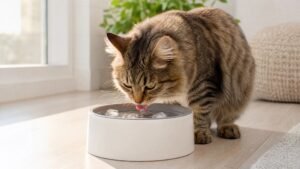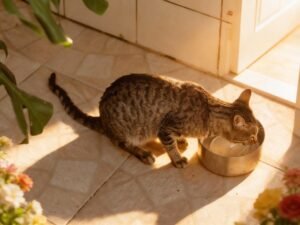

You fill your cat’s water bowl with fresh water every morning, but by the end of the day, it still looks almost untouched.
Sound familiar?
Many cat owners wonder the same things:
Should my cat drink tap water? Is filtered water better? Do cats prefer cold or warm water? And why does my cat seem to drink so little?
The truth is that there is no single “perfect” type of water for every cat. Most healthy cats simply need water that is clean, fresh, safe, and easy to access.
However, cats can be surprisingly picky about their drinking habits. Some prefer water that is completely still, while others love a flowing fountain. Some cats happily drink tap water, while others turn their noses up at anything with a noticeable smell.
Finding the best water for your cat is less about buying the most expensive option and more about understanding what makes your cat comfortable enough to drink regularly.
In this guide, we’ll look at different types of drinking water for cats, the best water temperature, and simple ways to encourage healthier drinking habits.
Why Does Choosing the Right Water Matter for Cats?
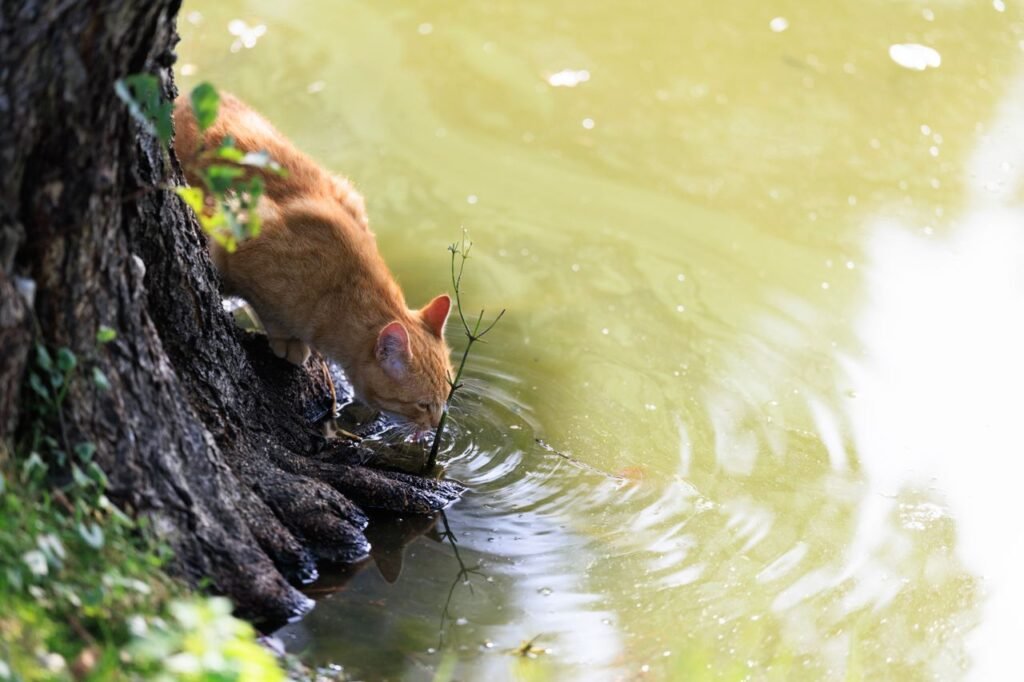
Compared with humans and many dogs, cats are naturally not big drinkers.
Their ancestors evolved in dry environments and received much of their moisture from the prey they hunted. Because of this, modern domestic cats often do not have the same natural urge to drink large amounts of water.
This becomes especially important for cats that mainly eat dry kibble. Unlike wet food, which contains a significant amount of moisture, dry food provides very little hydration. If a cat does not drink enough water throughout the day, maintaining proper hydration can become more challenging. According to a seminal study published in the British Journal of Nutrition (Buckley et al., 2011), cats fed an exclusively dry diet have a significantly lower total daily water intake compared to those fed wet food, even when fresh water is provided ad libitum. Over time, this chronic lower fluid intake leads to higher urine concentration, increasing the risk of Feline Lower Urinary Tract Disease (FLUTD) and urinary crystal formation.
Many owners notice that their cats barely touch their water bowls and assume their cats simply “don’t like water.”
But often, the issue is not the water itself. Cats are extremely sensitive animals, and small details can influence whether they choose to drink.
Your cat may avoid water because:
- The water has been sitting too long and no longer smells fresh.
- The water has a noticeable chlorine or chemical smell.
- The bowl is placed near the litter box or in a noisy area.
- The water temperature is not comfortable.
- The bowl shape or material makes drinking unpleasant.
The goal is not to force your cat to drink more water. Instead, create a drinking environment that feels natural, safe, and appealing.
What Is the Best Water for Cats?
There are several common options when choosing drinking water for cats, including:
- Tap water
- Filtered water
- Purified water
- Bottled water
- Distilled water
The best choice depends on your local water quality, your cat’s preferences, and any special health considerations.
For most healthy cats, the best water is not necessarily the most expensive or specially formulated option. What matters most is that the water is clean, fresh, safe to drink, and—most importantly—something your cat actually enjoys drinking on a regular basis.
Here is a quick comparison of common water choices.
| Water Type | Overall Recommendation | Advantages | Things to Consider |
|---|---|---|---|
| Filtered Water | Recommended | Reduces chlorine taste and unpleasant odors; often more appealing to sensitive cats | Filters need regular replacement |
| Purified Water (Reverse Osmosis) | Good Option | Removes many dissolved substances and impurities | Removes minerals as well, so it may not be necessary for every cat |
| Tap Water | Usually Fine | Convenient, affordable, and safe in many areas | Quality varies depending on local water systems |
| Boiled Water (Cooled) | Safe Option | Can reduce some contaminants when properly prepared | May taste different after boiling |
| Bottled Water | Occasional Use | Convenient for travel or emergencies | Mineral levels vary between brands |
| Distilled Water | Not Usually Needed | Very low in dissolved minerals | Not recommended as the only daily water source for most cats |
Can Cats Drink Tap Water?
Yes, in most cases, cats can safely drink tap water.
If your local tap water is considered safe for people, it is generally safe for healthy cats as well. Many cats drink tap water their entire lives without any problems.
However, water quality can vary significantly depending on where you live. Some tap water contains a stronger chlorine smell, higher mineral content, or a taste that some cats find unpleasant.
Because cats have a highly sensitive sense of smell, they may refuse water that seems completely normal to us.
If your cat suddenly drinks less after a change in your home’s water supply, try offering filtered water and see whether their behavior changes.
Sometimes, the problem is not the water itself—it is simply that your cat does not like the way it smells.
Is Filtered Water Better for Cats?
For many cats, filtered water can be a great choice.
A water filter can reduce chlorine odors, improve taste, and remove certain impurities from tap water. This can be especially helpful for cats that are sensitive to smells or seem hesitant to drink.
Some cats that ignore their water bowl may become more interested after switching to filtered water.
However, a filter only works when it is properly maintained. An old or dirty filter can collect buildup and reduce water quality over time.
If you use a filtered water system:
- Replace filters according to the manufacturer’s instructions.
- Wash the water container regularly.
- Do not assume filtered water eliminates the need for cleaning.
Freshness still matters.
Is Bottled Water Good for Cats?
Bottled water is generally safe for cats, but it is not always the best everyday choice.
It can be useful when traveling, during temporary water quality concerns, or when your normal water source is unavailable.
However, bottled water brands can vary widely. Some contain higher levels of minerals, while others are essentially purified water.
A higher price does not automatically mean better water for your cat.
For most households, safe tap water or properly filtered water is usually a simpler and more practical long-term option.
Can Cats Drink Distilled Water?
Cats can drink distilled water occasionally, but it is usually unnecessary as their only water source.
Distilled water goes through a process that removes almost all dissolved minerals. While this makes it very pure, it also means it lacks minerals naturally found in many other water sources.
For healthy cats, the main goal is not finding the “purest” water possible. The priority is providing water that is safe, fresh, and encourages your cat to drink regularly.
Do Cats Prefer Cold or Warm Water?
Choosing the right type of water is only part of the equation. Many cat owners also wonder about something that seems simple but can actually affect drinking habits:
Do cats prefer cold water or warm water?
The answer is: it depends on the individual cat.
There is no evidence that normal cold water is harmful to healthy cats, and many cats happily drink cool water without any problems. However, some cats may have personal preferences when it comes to temperature, just like humans do.
A cat’s decision to drink is often influenced by small details, including smell, freshness, location, and temperature.
Can Cats Drink Cold Water?
Yes, cats can drink cold water.
For most healthy cats, cool water from the tap or a water bowl is completely fine. You do not need to warm your cat’s water unless there is a specific reason to do so.
However, extremely cold water—such as water straight from the refrigerator or water filled with ice cubes—may not appeal to every cat.
One reason is that temperature can affect how strongly water smells. Since cats rely heavily on their sense of smell when exploring their environment, very cold water may have a less noticeable scent and seem less interesting to some cats.
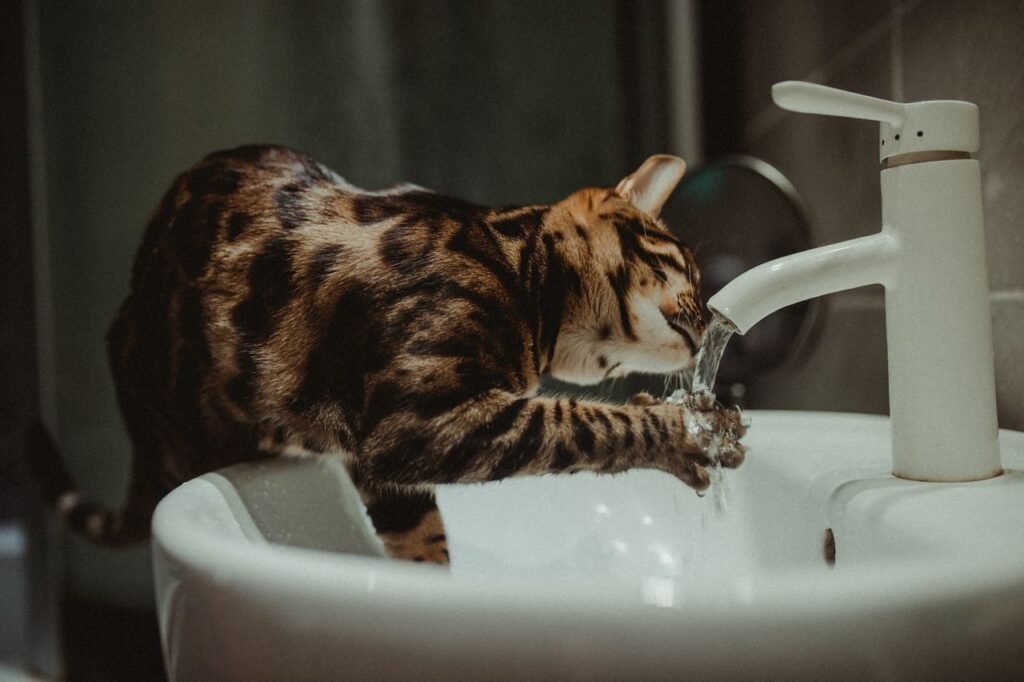
If your cat loves drinking from a dripping faucet, they may not actually be looking for cold water. They may simply prefer water that feels fresh and moving.
Is Warm Water Better for Cats?
Some cats prefer room-temperature or slightly warm water, especially if they are used to drinking water mixed with wet food.
Warmer water can release more scent, which may make it more appealing to cats with sensitive noses. This is one reason some cats show more interest in water that is closer to room temperature rather than very cold water.
During colder months, room-temperature water may also feel more comfortable for some cats.
However, the water should never be hot. Cats have sensitive mouths, and water that feels warm to you may already be uncomfortable for them.
Is Room-Temperature Water the Best Choice for Cats?
For many cats, room-temperature water is a simple and reliable choice.
It avoids the extremes of very cold or warm water and is similar to what a cat would naturally encounter in the environment.
If you are unsure what your cat prefers, starting with fresh, room-temperature water is usually the easiest option. From there, you can observe your cat’s behavior and adjust if needed.
The best temperature is ultimately the one that encourages your cat to drink more consistently.
How to Choose the Best Water Based on Your Cat’s Habits
Every cat has its own personality, and drinking preferences are no exception.
Instead of trying to find one universal answer, pay attention to what your cat is telling you.
Here are some common situations and what they may mean:
If your cat drinks normally and your tap water is safe:
There may be no reason to change anything. A simple routine with fresh water is often enough.
If your cat sniffs the bowl but walks away:
Your cat may dislike the smell of the water, the bowl material, or the location. Try filtered water or moving the bowl to a quieter area.
If your cat rarely drinks:
Offer more options, such as placing multiple water bowls around the home, adding a cat fountain, or increasing moisture through wet food.
If your cat constantly tries to drink from faucets:
Your cat may prefer moving water. A fountain can provide a similar experience while making fresh water available throughout the day.
Other Factors That Affect How Much Water Your Cat Drinks
Sometimes, the water itself is not the problem.
Cats are very particular about their surroundings, and several small environmental factors can influence whether they choose to drink.
Bowl Material and Shape Matter
The type of bowl you use can make a bigger difference than many owners realize.
Plastic bowls are convenient, but they can develop small scratches over time where bacteria and odors may collect. Some cats also dislike the smell of plastic.
Stainless steel and ceramic bowls are often easier to clean and are commonly preferred by many cat owners.
The shape of the bowl matters too.
Some cats dislike deep, narrow bowls because their whiskers touch the sides while they drink. Since whiskers are highly sensitive, repeated contact can make some cats uncomfortable.
This is why many cats prefer wide, shallow bowls that allow them to drink without their whiskers constantly brushing against the edges.
Bowl Location Can Affect Drinking
Cats are naturally cautious about where they eat and drink.
Many cats prefer their water bowl to be placed away from the litter box and sometimes even away from their food bowl.
This behavior comes from their natural instincts. In the wild, animals often avoid drinking water near areas where waste may be present or where prey has been handled.
At home, this means a quiet, separate drinking area may encourage your cat to drink more comfortably.
Fresh Water Matters More Than You Think
To humans, a bowl of water may look perfectly fine after sitting for a day.
To a cat, it may already smell different.
Cats have an excellent sense of smell and can notice tiny changes that we cannot. Dust, food particles, saliva, and other invisible changes can make old water less appealing.
One of the easiest ways to encourage better drinking habits is also one of the simplest:
Replace your cat’s water regularly and clean the bowl often.
Fresh water is usually more attractive than water that has been sitting around.
Are Cat Water Fountains Worth It?
Many cats are fascinated by moving water.
If your cat regularly drinks from faucets, sinks, or running water sources, a cat fountain may be worth considering.
Moving water can feel fresher to cats, and some cats simply enjoy the experience of drinking from a flowing source.
However, a fountain is not automatically better than a regular bowl.
The most important factor is cleanliness.
A dirty fountain can quickly become less appealing and may collect bacteria, slime, or buildup. Regular cleaning and filter replacement are essential.
Have you ever noticed a pink or reddish film inside a pet fountain?
That is often associated with Serratia marcescens, a type of bacteria commonly found in damp environments. While it is not something most healthy cats encounter as a serious problem, keeping fountains clean is still important, especially for older cats or cats with health concerns.
How to Encourage Your Cat to Drink More Water
If your cat is not drinking enough, small changes can make a big difference.
Try these simple strategies:
- Place several water bowls in different areas of your home.
- Experiment with filtered water if your cat dislikes the smell of tap water.
- Try a cat fountain if your cat prefers moving water.
- Keep bowls clean and refill them with fresh water regularly.
- Add more wet food to your cat’s diet to increase moisture intake.
The goal is not to force your cat to drink.
Instead, give your cat more opportunities to drink in a way that feels natural and comfortable.
Sources & Further Reading
- Cornell Feline Health Center — Information about feline hydration, water intake, and dehydration prevention.
- Wooding, M., & Mills, D. — Research exploring feline preferences between still and flowing water sources.
- Buckley, C. M. F., Hawthorne, A., Colyer, A., & Stevenson, A. E. (2011). Effect of dietary water intake on urinary output, specific gravity and relative supersaturation for calcium oxalate and struvite in the cat. British Journal of Nutrition, 106(S1), S128–S130.