

Download Our Cat Sex Identification Quick Guide
In some animal species, males and females look so different that sex is obvious at a glance—think of a male lion’s mane, or female anglerfish that grow much larger than males. This kind of visible difference is called sexual dimorphism.
So what about cats? Do male and female cats have clear visual differences? And more importantly, can you tell a cat’s sex just by looking, without checking under the tail or visiting a vet?
The short answer is: sometimes—but not always. Below, we’ll walk through the most useful visual clues, explain what they can (and cannot) tell you, and show where science supports—or contradicts—common beliefs.
Visual Tips for Telling Male and Female Cats
Humans can identify another person’s sex from appearance alone with an accuracy of up to 96%. Cats are much trickier. Still, there are some reliable physical patterns worth knowing.
Is There a Visible “Bulge”?(Testicles)
One of the most important clues is whether there is a noticeable bulge at the base of the tail.
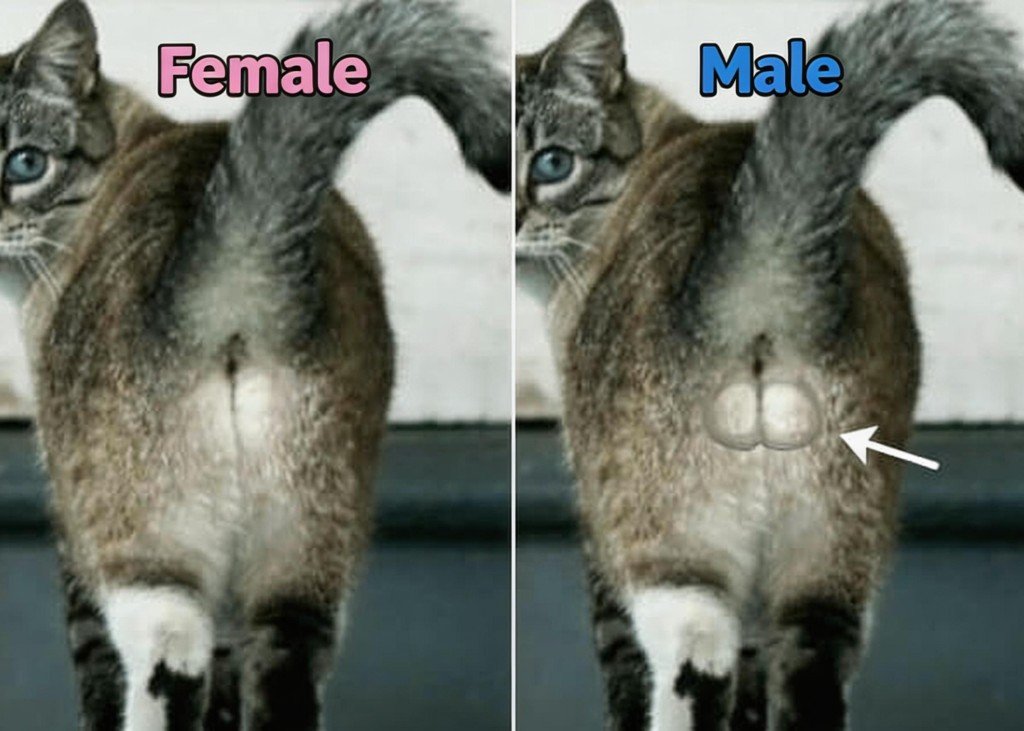
- Unneutered male cats often show a rounded bulge in this area, sometimes described as resembling the Greek letter ω (omega). This is where the testicles are located.
- Female cats, whether spayed or not, do not have this bulge.
- Neutered male cats may still show a slight swelling, because the skin that once held the testicles remains. Their appearance often falls somewhere between an intact male and a female.
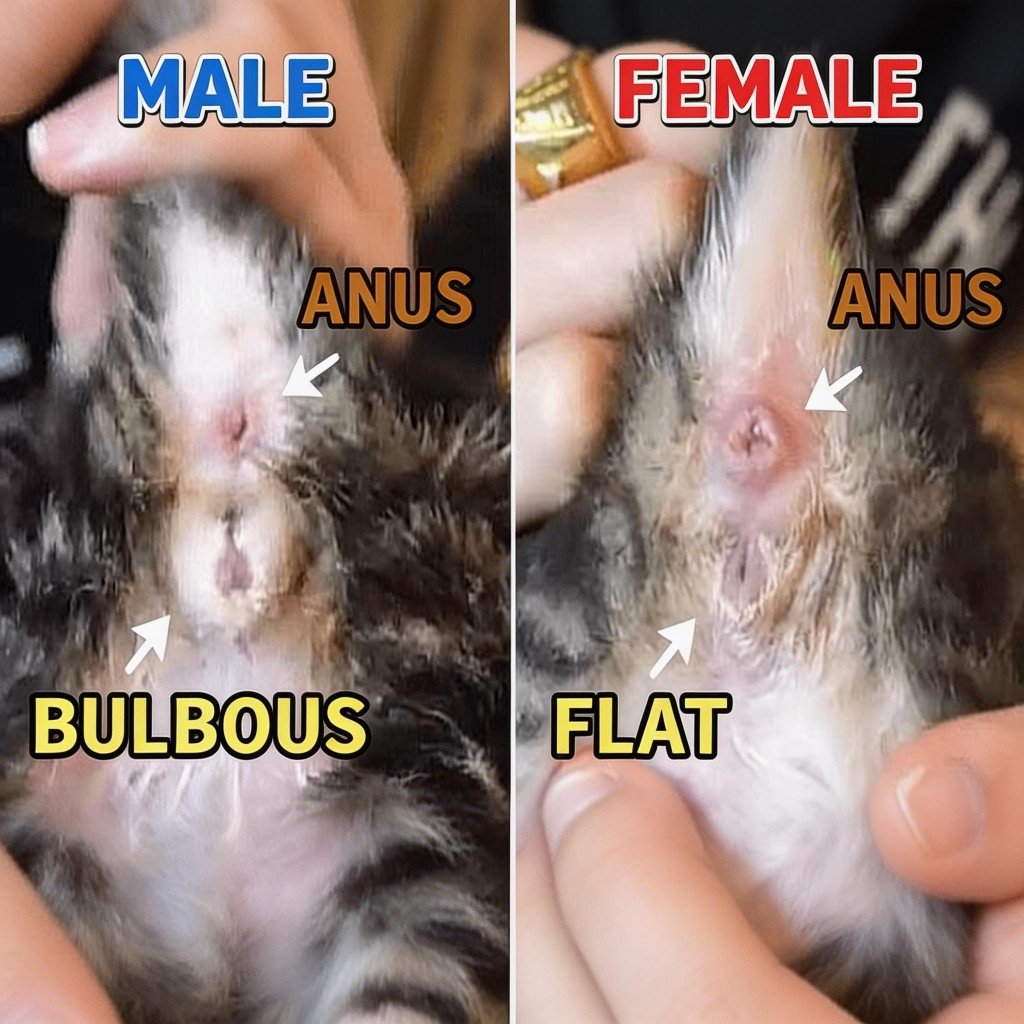
⚠️ Kittens are a special case. In very young cats, the testicles may not have descended yet. When no bulge is visible, sex is often judged by the distance between the anus and the genital opening instead.
Coat Color Patterns
Coat color is one of the strongest visual clues, because some colors are directly linked to sex chromosomes.
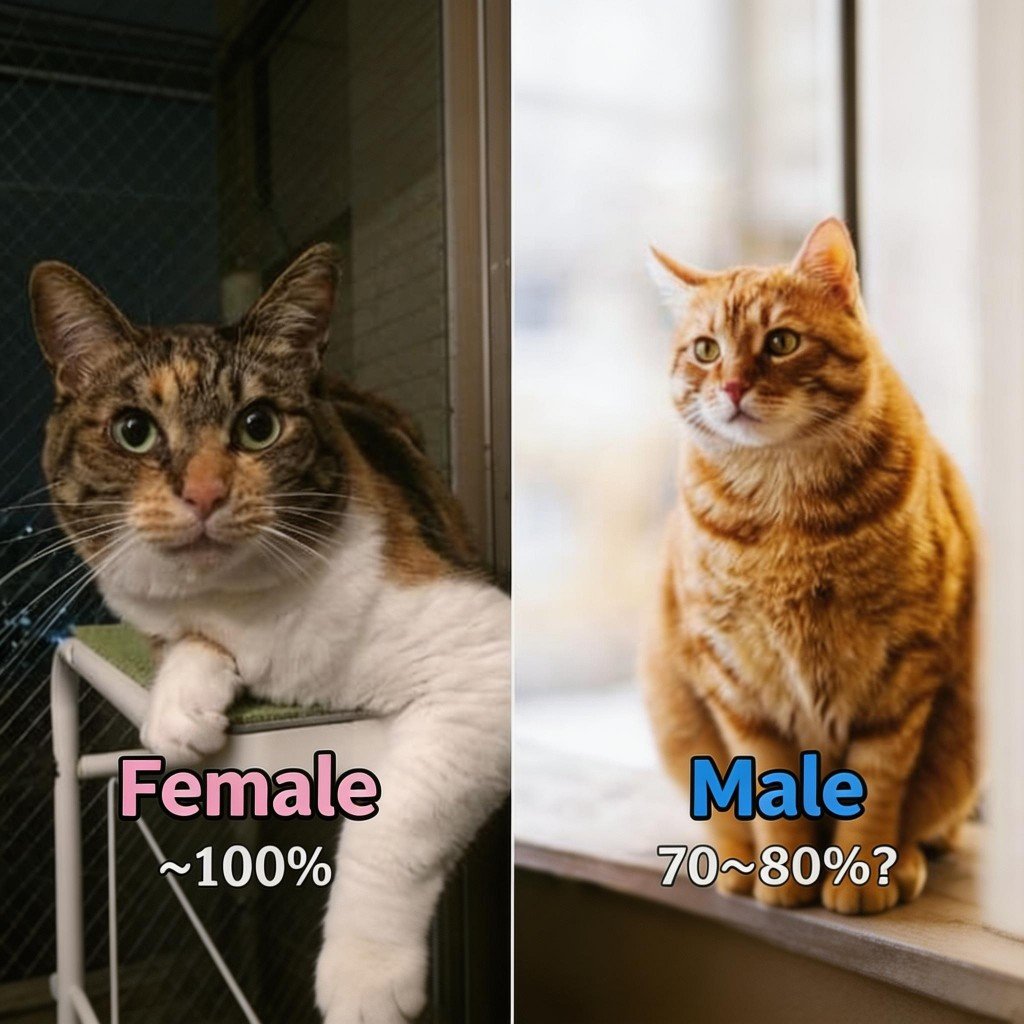
- Calico and tortoiseshell cats are almost always female. This is due to a genetic process called X-chromosome inactivation, which only occurs when a cat has two X chromosomes.
- Orange (ginger) cats, including orange tabbies and orange-and-white cats, are much more likely to be male.
Why? The gene that produces orange coloring (the O gene) sits on the X chromosome:
- Male cats (XY) need only one X chromosome with the O gene to be orange.
- Female cats (XX) need two X chromosomes carrying the O gene to appear orange.
Because that requirement is stricter for females, male orange cats greatly outnumber females.
Body Weight
On average, male cats weigh more than female cats, making body weight another useful clue.
A long-term prospective study of 209 adult pet cats (most of them neutered) found that at age 7:
- Male cats averaged 5.19 kg (11.4 lb)
- Female cats averaged 4.35 kg (9.6 lb)
That’s a difference of about 0.83 kg (1.8 lb), and the difference remained statistically significant across age groups (p < 0.001).
Even when cats had the same Body Condition Score (BCS)—meaning they were equally lean or overweight—males consistently weighed more across small, medium, and large body types.
Overall Body Shape
Male cats are also more likely to appear stocky or overweight, especially after neutering.
Multiple studies in North America and Europe show that:
- Overweight and obese cats are more often male
- Neutered males tend to gain more weight and body fat than neutered females
This difference reflects not only size but also sex-based fat distribution. So if a cat appears especially broad, thick-set, or heavy for its height, that can support—but not confirm—a male identification.
Bone Structure and Leg Length
Male cats tend to have slightly longer legs, which can affect height and walking stride.
A gait-analysis study from São Paulo State University (UNESP) examined walking patterns in adult cats using pressure-sensitive mats. Results showed:
- Average stride length: males ~68 cm, females ~57 cm
- Front leg length: males 24.9 cm, females 22.5 cm
- Back leg length: males 25.6 cm, females 23.3 cm
These differences confirm that male cats generally have larger skeletal frames, even when body weight overlaps.
Behavior Differences (Mostly in Unneutered Cats)
Behavior can also offer clues, especially when cats are not spayed or neutered.
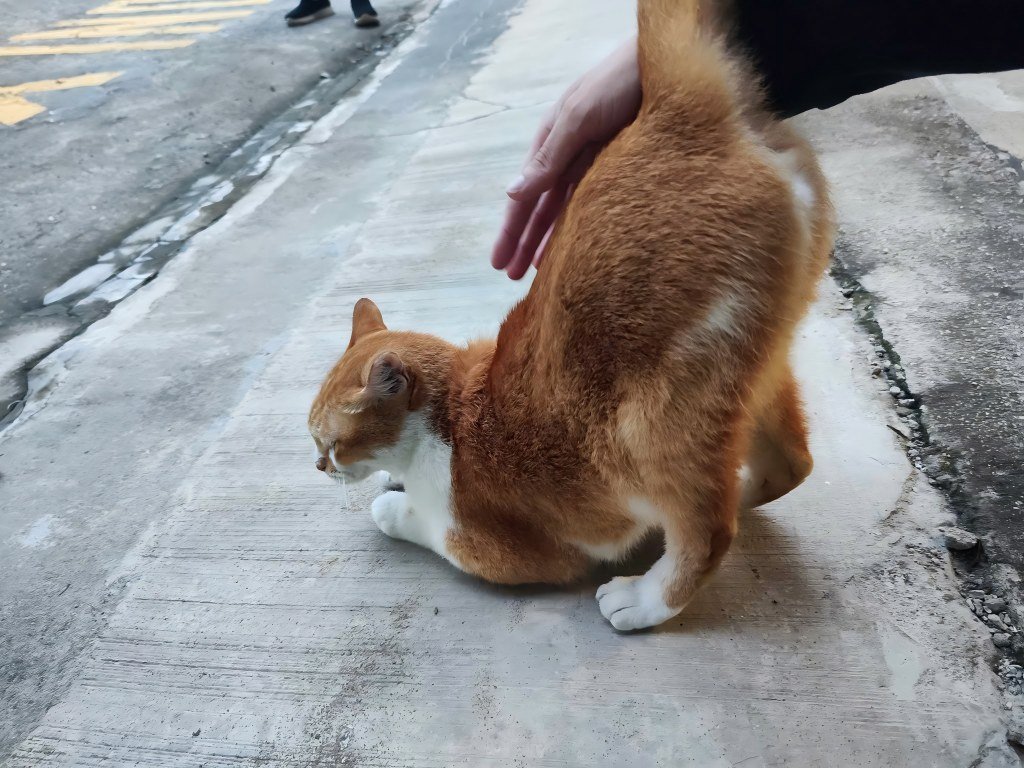
Unspayed females in heat may:
- Vocalize loudly and repeatedly
- Spray urine
- Assume a mating posture with an arched back
Unneutered males may:
- Roam farther from home
- Spray urine to mark territory
- Fight with other male cats
After spaying or neutering, these hormone-driven behaviors often decrease or disappear.
Face Shape and Facial Features
You may hear claims that male cats have wider faces or prominent “cheeks.” Research shows this is mostly a myth.
CT scan studies of cat skulls found:
- No significant difference in skull width between males and females
- So-called “jowls” are usually fat deposits, not sex-specific structures
In short, while male cats may look broader-faced, this is usually due to size or body fat—not skull shape.
Skeletal Differences Between Male and Female Cats
When males and females of a species show consistent skeletal differences, this is called sexual dimorphism. Do cats show this at the bone level?
Can Skull and Pelvis Bones Reveal a Cat’s Sex?
A detailed morphometric study from Chiang Mai University examined 38 cat skeletons using 44 precise measurement points across the skull, jaw, and pelvis.
The findings were clear:
- Pelvic bones are far more reliable than skull bones
- Using multiple pelvic markers, sex could be identified with up to 97.3% accuracy
- Skull features alone were far less dependable
Key pelvic indicators included:
- Iliac spine (more flared in males)
- Ischiatic arch angle (wider and rounder in females)
What About Long Bones Like Legs?
A follow-up study examined 92 skeletons and found that nearly all long bones showed sex differences.
Average accuracy when using a single bone:
- Scapula: 74–79%
- Humerus: 84–93%
- Radius: 93–95% (highest accuracy)
- Femur: ~89%
- Tibia: 89–94%
Researchers concluded that long bones alone can often identify sex accurately, especially in archaeological or forensic settings.
⚠️ Of course, this information is not practical for identifying a living pet, but it shows that sex differences in cats are real—even if subtle.
Final Takeaway
- Yes, male and female cats do differ in size, weight, bones, and behavior
- No, most of these differences are not obvious enough to rely on alone
- For everyday owners, external genital anatomy remains the most reliable method
- Visual clues like coat color, size, and behavior can support a guess, but rarely confirm it
If you’re ever unsure—especially with kittens—the safest answer is still a vet visit or hands-on examination.