
Cats sometimes eat less than usual, which we call decreased appetite, and other times they eat more than usual, known as increased appetite. What causes these changes? If a medical issue is involved, prompt veterinary attention is needed. In other cases, cat owners can take practical steps at home. Let’s break down the common scenarios and solutions.
How Much Should a Cat Eat?
In simple terms, how much a cat should eat depends on whether they can maintain a healthy body weight. Veterinarians often use the Body Condition Score (BCS) to judge whether a cat is eating too little, too much, or just the right amount. Using the Body Condition Score (BCS) on a scale of 1–5:
- BCS 3 indicates an ideal amount of food intake—this is normal appetite.
- BCS 5 indicates overeating.
- BCS 1 indicates undereating.
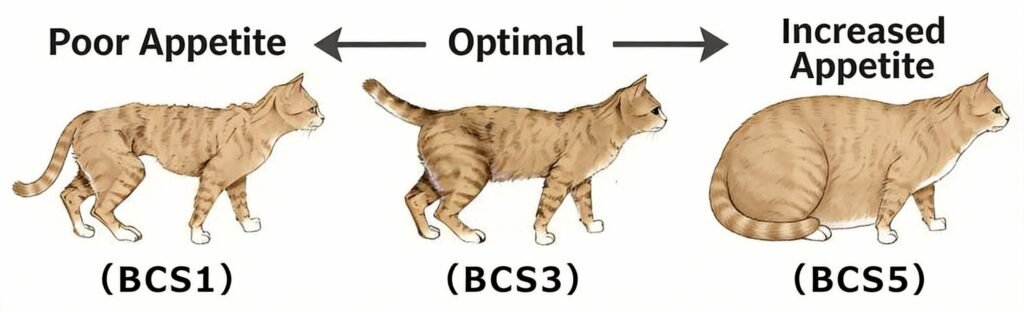
In short, a cat’s normal appetite is simply what it needs to stay at a healthy weight.
Factors That Affect Cat Appetite
Most cats are good at regulating their own food intake, so they rarely overeat or stop eating for long periods—unless something disrupts their routine. Appetite can fluctuate for several reasons:
Seasonal Changes
Studies show cats experience roughly four-month cycles in calorie intake, which affect body weight, food intake, and even thyroid function (Houpt et al., 1980). This means temporary decreases or increases in appetite may just reflect natural biological rhythms.
A newer study of 38 cats found seasonal trends in food intake:
- Spring: normal
- Summer: decreased
- Autumn: normal
- Late autumn–winter: increased
Possible causes include activity levels, sunlight exposure, outdoor temperature, and digestive efficiency. While the exact mechanisms aren’t fully understood, appetite tends to be lowest in summer and highest in late autumn to winter. Recording your cat’s intake over time may reveal these natural cycles.
Aging
Unlike humans, who usually need less food as they age, cats around 10–12 years old often require more calories, and this may continue past age 12. For healthy older cats, a slight increase in appetite is normal. However, some senior cats do experience decreased appetite. Overall, caloric intake for older cats may fluctuate from 20% below to 15% above the adult cat average.
Reproductive Cycle
- Male cats may eat less during breeding periods due to higher testosterone levels.
- Female cats often eat more, especially during pregnancy and nursing.
Typical increases:
- Pregnancy: 1.6–2× normal intake
- Nursing: 2–6× normal intake
These changes are temporary, and intake usually returns to normal after kittens begin weaning around three weeks old.
What Counts as Abnormal Appetite?
Normal fluctuations, like seasonal or reproductive changes, are usually harmless. But abnormal appetite occurs when a cat eats much more or less than expected for reasons outside these patterns—for example:
- Eating more in summer
- Eating less during pregnancy
We can categorize abnormal appetite into decreased appetite and increased appetite.
Causes of a Cat Not Eating and What to Do
The biggest concern with reduced appetite is hepatic lipidosis (fatty liver disease). Fat should normally move from the liver to fat stores, but in some cases it accumulates in the liver, causing serious health issues.
Adult cats that go without food for 2–14 days are at risk. Watch for:
- No food intake for 36 consecutive hours
- Eating only half the usual amount over three days
Owners should record actual food consumption daily rather than just putting out food.
Kittens Nursing Less
In nursing kittens, the main danger is low blood sugar, not liver disease. Kittens should not go more than 18–24 hours without milk. If this occurs, contact a veterinarian immediately—sometimes IV fluids are needed to maintain blood sugar and prevent life-threatening complications.
Illness
Illness is often the first cause to consider. Conditions that may reduce appetite include:
- Parasites
- Infectious diseases
- Oral issues (stomatitis, dental problems)
- Gastrointestinal disorders
- Liver or pancreatic disease
These require professional evaluation—self-treatment before ruling out illness can delay diagnosis and worsen health.
Food Temperature or Flavor
Cats are picky eaters. Subtle differences in taste, texture, temperature, or smell can strongly influence intake. Observing behavior while eating helps identify preferences:
- Enjoying food: eyes partially closed, tongue slightly out, slight mouth movements
- Disliking food: mouth open, tongue out, pushing food away
Tips to improve intake:
- Add water to dry food
- Mix in wet food
- Slightly crush kibble
- Warm food to ~37°C (human body temperature) to release aroma (Aging cats prefer warm food.)
Nutritional Mismatch
Cats may refuse food if nutrients don’t match their needs. Optimal balance:
- Protein: ~50% of calories
- Carbs: ≤3g/kg (~70 kcal)
Low protein or high carbs can lead to refusal, and flavor adjustments alone often won’t fix it. Select high-protein, low-carb foods, and supplement occasionally with safe items like chicken breast. Limit tuna to ~20 g/week due to mercury risk. We’ve already put together a detailed guide on balanced cat nutrition.
Food Boredom
Cats may tire of eating the same food long-term. To manage:
- Introduce new food gradually (~10% at a time)
- Offer multiple options like a “cafeteria”
- Use flavor toppers cautiously
Neophobia (Fear of New Foods)
Cats may resist unfamiliar foods, especially if they didn’t experience varied diets before six months old. Gradual transition helps:
- Start with 10% new food
- Observe acceptance before full replacement
Taste Aversion
If food causes discomfort, cats may avoid it long-term—even familiar food. They can link discomfort to the last food eaten. Gradual introduction of different foods in separate bowls can help overcome aversion.
In short, once a cat decides something is “bad,” it can stay upset about it for a long time.
Heat
Hot weather may reduce appetite due to fatigue and lower energy needs for thermoregulation. Keep cats cool with air conditioning—fans alone are insufficient.
Post-Vaccination or Medication
Cats may temporarily eat less after vaccines or deworming. Usually short-term, but consult a vet if no food intake lasts over 36 hours.
Dish or Feeding Method
Cats may dislike bowls that are too deep, shiny, unstable, or contaminated with other cats’ saliva (whisker stress). Try clean, shallow ceramic dishes on stable surfaces.
Environmental Stress
Changes in routine, new pets, new home, visitors, or loud noises can sharply reduce intake. Create a quiet, semi-enclosed feeding area where cats feel safe.
A study that followed 32 cats for 77 weeks found that when something sudden or unexpected happened in a cat’s environment, the chances of it eating less went up more than nine times (L. Stella, 2011).
Feeding Schedule Changes
Sudden changes in meal times may cause temporary loss of appetite. Patience and gentle encouragement, like hand-feeding, help cats adjust.
Outdoor Feeding
Free-roaming cats may eat elsewhere and appear uninterested at home. Indoor feeding is safer to control intake and prevent illness.
Aging and Oral Health
Older cats may struggle with hard food due to dental wear. Switch to wet food and consult a vet for severe oral disease. Cats often manage to eat without teeth, so don’t panic.
Nasal or Olfactory Issues
Scent drives appetite. Nasal congestion or upper respiratory infections can reduce intake. Vaccination and stress reduction help prevent recurring issues, like feline herpes virus flare-ups.
Causes of Eating Too Much and How to Handle It
Overeating can quickly lead to obesity, putting extra strain on a cat’s joints and heart, and raising the risk of diabetes. Keeping your cat’s appetite under control is very important.
Medical Causes
Conditions that increase appetite include:
- Diabetes
- Hyperthyroidism
- Cushing’s disease
- Acromegaly
- Exocrine pancreatic insufficiency
- Hydrocephalus (in kittens)
Brain injuries affecting the hypothalamus can also alter appetite. Vet evaluation is essential if multiple symptoms are present.
Newly Adopted Former Strays
Cats from outdoor life may overeat initially due to survival instincts. This usually resolves once they feel secure.
Owner Overfeeding
Treats and frequent snacks can contribute to obesity. Control treat calories and reduce main meal portions accordingly.
Free-Feeding
Leaving food available 24/7 can cause overeating. Portion control is better for weight management.
Cold Indoor Temperatures
Cats burn more calories in cold environments, increasing appetite. Adjust air conditioning to ~25–26°C to reduce unnecessary energy expenditure.
Genetic Predisposition
Some cats have genes (MC4R, NPY1R) that increase risk of overeating. Owners must control food intake to prevent obesity.
Birth Season
Cats born 4 months before the summer solstice may be more prone to obesity. Regular monitoring and fiber-enriched diets help prevent excessive weight gain.
Spaying/Neutering
Cats often gain weight after surgery. Reduce caloric intake by 15–20% post-procedure. Ignore begging for extra food—cats adapt, and controlling portions strengthens the human–cat bond.
If you want to explore more about keeping your cat healthy through proper nutrition and feeding habits, check out our full Cat Nutrition & Diet section. There, you’ll find guides on balanced diets, feeding routines, and tips for picky eaters—everything you need to help your cat stay happy and healthy.