
This article will explain in detail the steps of bathing a cat, supported by photos and videos. When your cat’s fur becomes dirty or begins to smell, these methods can help you clean them.
The Necessity of Bathing Your Cat
Basically, cats don’t need to be bathed for health reasons, as not bathing them will not make them sick or cause death. The main reason for bathing a cat is that their appearance and smell can affect the quality of life when living with humans. By “affecting” we refer specifically to the cat’s appearance being messy or the odor that can develop.
Cats Dislike Water
Cats generally do not like their fur and skin getting wet. This behavior can be traced back to their ancestors — the Libyan wildcat (African wildcat) — which lived in desert environments with extreme temperature changes. If these cats became wet on cold nights, the moisture would evaporate and take away a lot of heat, potentially lowering their body temperature to dangerous levels. As a result, cats are instinctively averse to getting wet. When you try to bathe a cat, they will often fiercely resist due to this innate instinct.
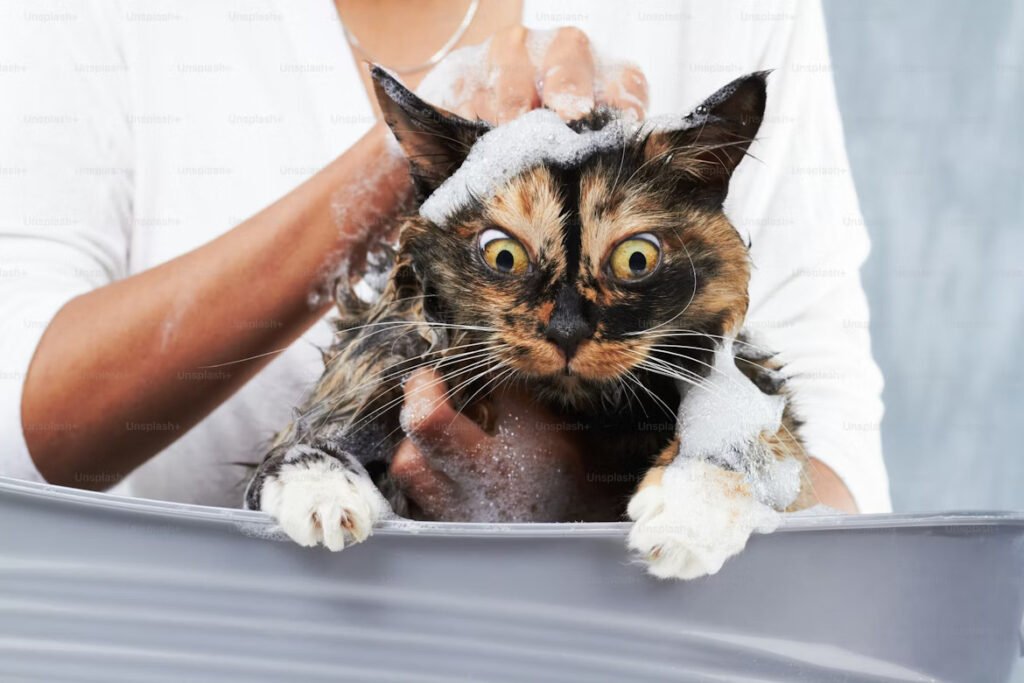
Cats Experience Increased Blood Sugar After Bathing
Scientific studies have also proven cats’ fear of water. In a 2002 study involving 20 healthy cats, the blood sugar and lactic acid levels dramatically changed during a 5-minute bathing session. The study found that the cats’ blood sugar levels rose from 83 mg/dL to 162 mg/dL, while lactic acid increased from 6.3 mg/dL to 64.0 mg/dL. The study also indicated that cats with higher blood sugar had elevated levels of stress hormones, such as norepinephrine. Therefore, bathing your cat undoubtedly causes significant stress.
Which Cats Need a Bath?
Not all cats require regular baths. Generally, the following types of cats may need more frequent bathing:
Cats That Need a Bath
- Long-Haired Cats
Short-haired cats usually groom themselves to keep their fur clean, so they don’t require frequent baths. However, long-haired cats, which can’t groom as effectively, tend to accumulate dirt and need baths from time to time. - White Cats
White cats’ fur can get dirty more easily, and if the dirt is noticeable, an occasional bath is necessary. - Overweight Cats
If a cat is overweight, it may struggle to reach certain areas of its body, particularly the groin and tail regions, making those areas more prone to dirt. In these cases, a bath may be needed to clean those parts. - Sick or Elderly Cats
Sick or older cats may have difficulty grooming themselves and, as a result, may accumulate dirt. While frequent baths are not ideal because of the stress they cause, it’s important to bathe them if their fur becomes excessively dirty. - Unspayed Cats
Unspayed cats may exhibit “spraying” behavior during mating season, marking their territory with urine. This urine has a very strong odor, and the fur around their anus can become particularly smelly. Occasionally bathing such cats is necessary.
How Often Should You Bathe Your Cat?
Short-haired cats can be bathed every six months, while long-haired cats should ideally be bathed monthly. Pregnant cats, sick cats, and cats recovering from surgery should not be bathed. Additionally, trimming the fur around the anus, regardless of the cat’s fur length or color, can help maintain cleanliness and make bathing easier.
Can Bathing Help with Cat Allergies?
Research has shown that bathing a cat can somewhat reduce allergic reactions, but the effects are not long-lasting if done infrequently. According to a 1997 study, bathing a cat can reduce the level of an allergen called “Fel d 1.” The study found that cats bathed once a week showed a 44% reduction in airborne allergens after 5 weeks, and a 79% reduction after one month of weekly baths with a 3-minute soak. However, the effects are temporary, as the levels of Fel d 1 return to baseline after about 48 hours.
If you suffer from cat allergies and want to live with a cat, bathing them at least once a week (preferably twice) can be effective. However, since cats naturally dislike water, frequent bathing can impact their well-being, so it should be done in moderation.
Preparing to Bathe Your Cat
Below are the basic steps for preparing to bathe a cat. You can follow these steps for an effective bath. The necessary supplies are listed below:
Tools Needed for Bathing Your Cat
- A large basin or a pet bath tub
- Cat-specific shampoo and conditioner
- A comb
- 2-3 absorbent towels (for drying the body)
- A cat bathing bag (recommended for uncooperative cats, to prevent escape, biting, and scratching)
- Absorbent kitchen paper (for cleaning small areas)
- A sponge (for washing the face)
- A blow dryer
Here is a tutorial video on how to bathe your cat. While a pet bath tub is not used in the video, it will give you a good understanding of the overall process.
Original video: Click here
Choosing the Right Shampoo
The pH of human skin and cat skin differs, so human shampoos may be too harsh for cats, potentially causing skin irritation. For reference, here’s a comparison of pH levels across different mammals. As you can see, human skin has a pH of 4.8 (weakly acidic), whereas a cat’s skin has a pH of 6.4, which is closer to neutral (7.0).
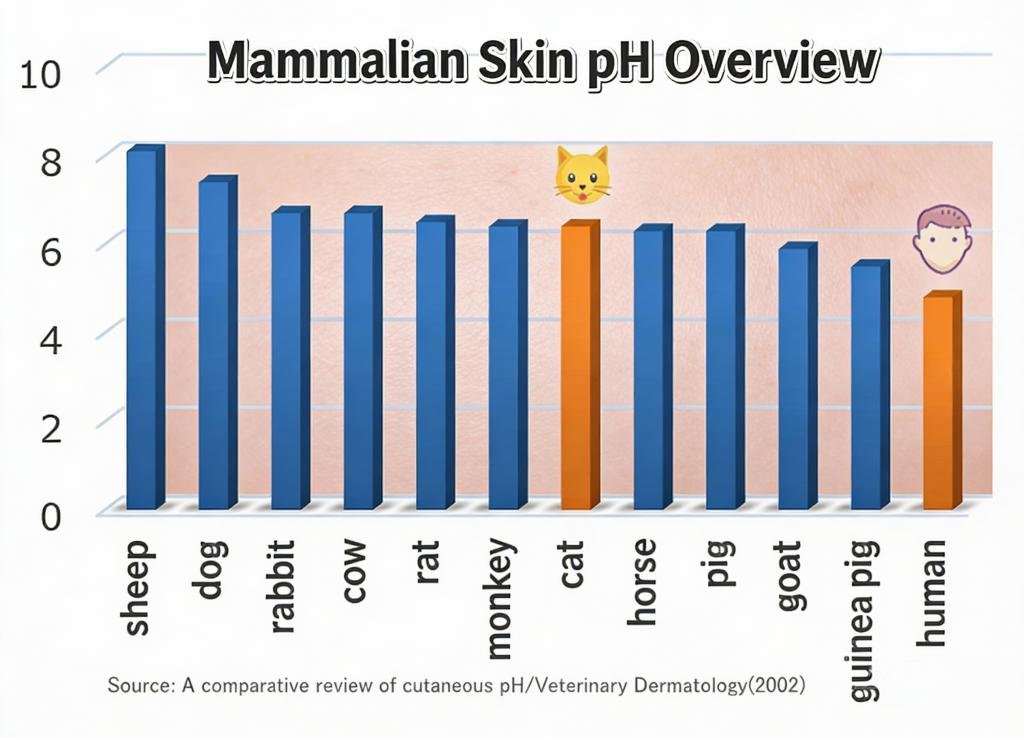
In recent years, many cat-specific shampoos have been developed, so it’s best to choose a cat-friendly product instead of using human shampoos.
Harmful Ingredients in Shampoo
- Diethanolamine (DEA)
Some shampoos contain this ingredient, which has been classified as a “possible carcinogen” by the International Agency for Research on Cancer (2014 edition). Long-term skin absorption of this substance can potentially lead to liver tumors. - Tea Tree Oil
Tea tree oil can cause toxicity in cats. Never apply pure tea tree oil to a cat’s skin or allow them to ingest it. For more information, refer to “Tea Tree Oil Poisoning in Cats and Dogs.” - Phenothrin
Some flea-prevention shampoos contain phenothrin, a substance that has caused poisoning incidents in the U.S. and should be avoided. For more details, see “The Dangers of Phenothrin in Flea Products for Cats.”
Even if a shampoo is marketed for cats, it may not always be 100% safe. Always carefully check the ingredients for harmful substances before purchasing.
Grooming Before the Bath
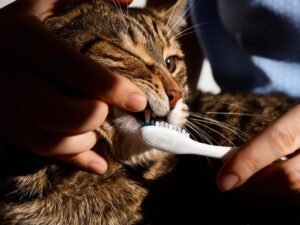
To remove dust from the fur and prevent tangles, brush your cat’s coat before bathing. If your cat sheds a lot, brushing can also reduce the risk of hair clogging the drain.
Brushing Your Cat
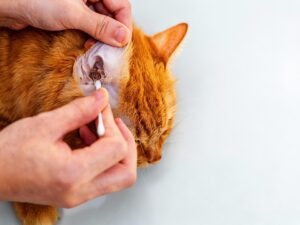
Before bathing, clean your cat’s ears. The steam during bathing can soften earwax, which, if it enters the ear canal, could lead to middle ear infections. Additionally, water entering the ears during the bath can cause outer ear infections. Consider using cotton balls to plug the ears to reduce noise and discomfort. Remember to remove the cotton balls after the bath.
How to Trim Your Cat’s Nails
Bathing can be very stressful for cats, and they may react aggressively, potentially scratching you. To prevent injury, it’s a good idea to trim your cat’s nails before bathing.
Pre-Bath Setup
Fill the pet bath tub with warm water, then add the appropriate amount of cat shampoo and mix it well. The tub will have a drain, but make sure to use a hair catcher to prevent fur from clogging the drain.
Cats do not have sweat glands and are prone to heatstroke, so the water temperature should not be too hot. The water should feel “warm” when you dip your hand in. You can also place a towel at the bottom of the tub to prevent your cat from slipping.
As mentioned, the pH and fatty composition of cat skin are different from humans, so always use a cat-specific shampoo, not one made for humans or dogs.
Bathing Steps for Cats
Pre-Bath Preparation
Place your brushed cat into the bath tub, ensuring the water level is shallow. Distribute the bath liquid evenly on the fur. You can use a sponge to help spread the shampoo.
Cleaning the Body and Limbs
Submerge your cat in the tub and apply the foam to their body. Use a sponge for more even distribution. If the foam is insufficient, add more shampoo as needed. Start from the neck and work down the body, cleaning the limbs last.
Cleaning the Tail and Anus
Be extra careful when cleaning the tail and anus, as these areas tend to accumulate dirt. For cats with full anal sacs, gently press the sacs to release fluid, then rinse with water. If your cat suffers from tail gland inflammation, use specialized shampoo for cleaning.
Cleaning the Face
Use a wet sponge to gently wipe your cat’s face, including the forehead, around the eyes, mouth, and chin. Be careful not to get water in their eyes.
Post-Bath Rinsing
Rinse your cat with warm water, ensuring all shampoo is thoroughly washed out. Avoid getting water in their ears and eyes. Incomplete rinsing can lead to
skin irritation or dandruff, so ensure every part is properly cleaned.
Drying Your Cat
After rinsing, gently pat your cat’s fur with absorbent towels to remove excess water. Avoid rubbing; gently press to help absorb moisture. You may need 2-3 towels. For smaller areas, use kitchen paper towels.
Using a Blow Dryer
Once the fur is somewhat dry, you can use a blow dryer. Since cats’ ears are very sensitive to high-frequency sounds, keep the dryer at a distance. You may want to first familiarize your cat with the sound of the dryer by running it nearby. Ensure the cat is fully dried, but avoid letting them get cold.
Final Grooming
Once completely dry, you can use an anti-static conditioner and comb through your cat’s fur to make it smoother and shinier.
Alternative Methods When Your Cat Dislikes Bathing
If your cat absolutely refuses to be wet, there are alternative methods to avoid forcing a bath, such as partial baths and dry shampoos. Here are a few options:
Partial Bath for Cats
If a specific area of your cat’s fur becomes dirty, like around the mouth after eating or around the anus due to diarrhea or spraying, you can choose a partial bath instead of a full-body bath.
- Mouth Cleaning: Gently wipe the fur around the mouth with a wet gauze, towel, or wet wipe.
- Anus Cleaning: Take your cat to the bathroom and gently rinse the area with warm water. If you bring the nozzle close to the body, cleaning effectiveness improves, but make sure the nozzle doesn’t touch your cat’s anus. For stubborn dirt, use cat-specific shampoo with a sponge or rubber gloves for a more thorough clean.
Dry Bath for Cats
If your cat refuses a full bath, dry shampoo methods can be used. Dry shampoo means no water is used, and these include:
- Foam Shampoo: This type of shampoo is foamy and can be applied directly to the fur to clean.
- Dry Powder: Sprinkle the cleaning powder onto your cat’s fur, then brush it out.
However, keep in mind that cats lick their fur during grooming, so any shampoo residue can be ingested. Always choose dry products made from safe, verified ingredients.
Safety Notes
- Avoid Flea Shampoos Containing Phenoxyethanol: Cats cannot metabolize this ingredient well, and ingesting it can cause acute poisoning, which can be deadly.